Title:
Tom Collins
Description:
The Tom Collins is the patriarch of all tall, fizzy, refreshing cocktails.
An indispensable classic, it epitomizes why simplicity equals cocktail greatness. Yes, it is merely a gin sour (or Gimlet depending on how you define that cocktail) with lemon juice instead of lime, served in a tall glass over ice and topped with soda water. But a well made Tom Collins is its own brand of singular magic.
While easy to make, knocking a Tom Collins out of the park a bit more challenging. Temperature, level of carbonation, balance, and dilution need to be in optimized. Unlike most drinks where all the ingredients are thrown into the mixing vessel at once, here the sequence of events is key. The methodology below will get you the most out of your Collins. An explanation of the ”why” behind this thinking is the commentary section.
Recipe
2 oz gin
¾ oz lemon juice
¾ oz simple syrup
chilled soda water - ideally from a small, unopened bottle
Combine gin, lemon juice and simple syrup in a shaker.
Fill a chilled collins/highball glass with ice.
Fill shaker with ice, shake for 3-4 seconds.
Pour in 2 ounces of soda water in collins glass.
Strain cocktail into glass.
Top with more soda, if needed/desired.
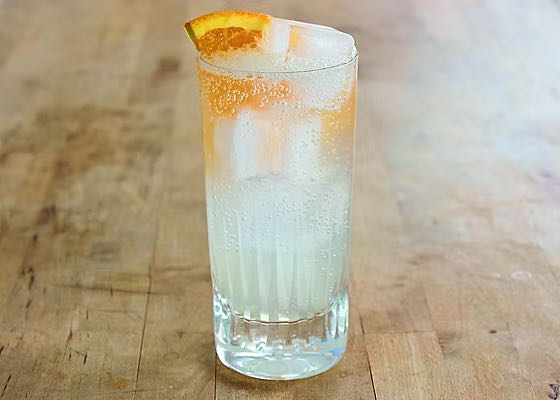
Garnish with an orange half wheel - if desired.
Tom Collins vs. Gin Fizz
The Gin Fizz is another old classic enjoying an uptick in popularity in recent years. It’s made of gin, lemon, sugar, served in tall glass and is topped with soda water. Which begs the question, what’s the difference between it and the Tom Collins? Honestly, nothing really.
The two drinks are separated by technical categorical differences which were more widely recognized in the 19th century (once again, you can thank Mr. Wondrich for my knowledge of this). Both were composed of a spirit, citrus, sugar and soda water, but a collins traditionally came over ice in a bigger glass and was meant to be nursed leisurely, whilst a fizz resided is a smaller vessel with no ice and was meant to be knocked back swiftly. So, tall fizzy drink with ice: collins, tall fizzy drink with no ice: fizz.
However, today’s bartenders don’t adhere to these parameters as strictly and the terms are often used interchangeably. Any drink with soda water can be called either a collins or a fizz. I presume because Gin Fizz sounds cooler than a boring old Tom Collins. Is this cocktail blasphemy? Technically yes, I suppose. But I don’t really have a problem with it, to me it’s splitting hairs, and I drink are better with ice.
As for the Gin Fizz, I’m a huge fan of the classic variation on it with egg white: a Silver Gin Fizz. You can get that recipe, and more collins vs. fizz commentary, on the Silver Gin Fizz Page .
The Perfect Collins Technique
Many recipes for this drink, and others like it, call for the ingredients to be combined in the glass, including the soda water, and stirred or rolled - which means poured back and forth between another glass or shaker - to mix. I have two problems with this: one, it doesn’t get the drink cold enough and two, it kills too much carbonation. That’s why my approach is to shake the gin, lemon and simple syrup separately, but briefly. This chills and combines them without creating much dilution. Then I pour the soda water into the glass first, rather than at the end. This way, when you strain in the drink everything is instantly mixed without any stirring, avoiding more carbonation disruption.
The Colder Everything is the Better
If you can, put the glasses in the freezer ahead of time, and even the gin (I generally don’t advocate for freezing spirits because it doesn’t allow for enough dilution, but since we’re adding soda water, dilution isn’t an issue). And of course the soda water should be as close to freezing without crystallizing as possible.
Soda Water
Use soda water with the highest level of carbonation you can find. Stay away from lightly carbonated sparkling water like Perrier or Pellegrino. While wonderful on their own, they don’t hold their own in cocktails. Schweppes and Canada Dry are my usual go-tos, Boylan’s is excellent too. The smaller 10 oz bottles are ideal. You’ll go through them quicker, so there’s less chance of them going flat. Naturally, for best results use bottles that are freshly opened, they’re never quite as bubbly after that.
Using Other Styles of Gin - Go For It!
As you’ll see in the history section below, the style of gin commonly used in a Tom Collins has shifted over it’s lifespan. So while London dry/dry gin is the prevailing choice today, it works with all walks of gin.
In fact, because it’s such a reliably tasty drink and allows the gin’s true colors to show through, the Tom Collins is the perfect vehicle to take a gin you’re unfamiliar with for a test drive, from genever (which makes it a John Collins), to old tom gin (which is arguably more historically accurate) to all the “new western” gins coming out of the craft scene featuring and untraditional botanicals and flavor profiles.
Since old toms vary so much - some are barrel-aged, some are sweetened - the quantity of sugar may need to be adjusted from brand to brand to achieve proper balance. Scaling back to ½ oz simple syrup is a good place to start, you can always add more.
Glass Size: 12-14 oz
The Tom Collins is such a pervasive drink it has it’s own glass: the collins glass, which are tall, narrow and holds about 12 ounces. These are perfect. But the drink can be served in anything it’ll fit in, like a highball glass - which are technically a bit small than a collins - or a large rocks glass. The latter may lack the visual panache, but who cares? The most important thing is to not to go much bigger than 14-16 ounces, otherwise you’ll run into one of three issues:
Adding with too much soda water and over-diluting the drink.
Having to make a perilously giant cocktail to fit the glass.
Serving drinks in glasses that are 3/4 full.
If pressed, I’d take the second one.
Variations and Relatives
Like most classics, the Collins is a formula ripe for revisions, whether you’re simply swapping in a new spirit or adding in some muddled fresh ingredients. Here are some of my favorites.
John Collins
2 oz genever
¾ oz lemon juice
¾ oz simple syrup
chilled soda water
Prepare as above.
Colonel Collins
2 oz bourbon
¾ oz lemon juice
¾ oz simple syrup
chilled soda water
Prepare as above.
Raspberry Grapefruit Collins
2 oz gin
¾ oz lemon juice
½ oz grapefruit juice
½ oz raspberry syrup
¼ oz Campari (optional)
chilled soda water
Prepare as above, garnish with expressed grapefruit peel.
An indispensable classic, it epitomizes why simplicity equals cocktail greatness. Yes, it is merely a gin sour (or Gimlet depending on how you define that cocktail) with lemon juice instead of lime, served in a tall glass over ice and topped with soda water. But a well made Tom Collins is its own brand of singular magic.
While easy to make, knocking a Tom Collins out of the park a bit more challenging. Temperature, level of carbonation, balance, and dilution need to be in optimized. Unlike most drinks where all the ingredients are thrown into the mixing vessel at once, here the sequence of events is key. The methodology below will get you the most out of your Collins. An explanation of the ”why” behind this thinking is the commentary section.
Recipe
2 oz gin
¾ oz lemon juice
¾ oz simple syrup
chilled soda water - ideally from a small, unopened bottle
Combine gin, lemon juice and simple syrup in a shaker.
Fill a chilled collins/highball glass with ice.
Fill shaker with ice, shake for 3-4 seconds.
Pour in 2 ounces of soda water in collins glass.
Strain cocktail into glass.
Top with more soda, if needed/desired.
Garnish with an orange half wheel - if desired.
Tom Collins vs. Gin Fizz
The Gin Fizz is another old classic enjoying an uptick in popularity in recent years. It’s made of gin, lemon, sugar, served in tall glass and is topped with soda water. Which begs the question, what’s the difference between it and the Tom Collins? Honestly, nothing really.
The two drinks are separated by technical categorical differences which were more widely recognized in the 19th century (once again, you can thank Mr. Wondrich for my knowledge of this). Both were composed of a spirit, citrus, sugar and soda water, but a collins traditionally came over ice in a bigger glass and was meant to be nursed leisurely, whilst a fizz resided is a smaller vessel with no ice and was meant to be knocked back swiftly. So, tall fizzy drink with ice: collins, tall fizzy drink with no ice: fizz.
However, today’s bartenders don’t adhere to these parameters as strictly and the terms are often used interchangeably. Any drink with soda water can be called either a collins or a fizz. I presume because Gin Fizz sounds cooler than a boring old Tom Collins. Is this cocktail blasphemy? Technically yes, I suppose. But I don’t really have a problem with it, to me it’s splitting hairs, and I drink are better with ice.
As for the Gin Fizz, I’m a huge fan of the classic variation on it with egg white: a Silver Gin Fizz. You can get that recipe, and more collins vs. fizz commentary, on the Silver Gin Fizz Page .
The Perfect Collins Technique
Many recipes for this drink, and others like it, call for the ingredients to be combined in the glass, including the soda water, and stirred or rolled - which means poured back and forth between another glass or shaker - to mix. I have two problems with this: one, it doesn’t get the drink cold enough and two, it kills too much carbonation. That’s why my approach is to shake the gin, lemon and simple syrup separately, but briefly. This chills and combines them without creating much dilution. Then I pour the soda water into the glass first, rather than at the end. This way, when you strain in the drink everything is instantly mixed without any stirring, avoiding more carbonation disruption.
The Colder Everything is the Better
If you can, put the glasses in the freezer ahead of time, and even the gin (I generally don’t advocate for freezing spirits because it doesn’t allow for enough dilution, but since we’re adding soda water, dilution isn’t an issue). And of course the soda water should be as close to freezing without crystallizing as possible.
Soda Water
Use soda water with the highest level of carbonation you can find. Stay away from lightly carbonated sparkling water like Perrier or Pellegrino. While wonderful on their own, they don’t hold their own in cocktails. Schweppes and Canada Dry are my usual go-tos, Boylan’s is excellent too. The smaller 10 oz bottles are ideal. You’ll go through them quicker, so there’s less chance of them going flat. Naturally, for best results use bottles that are freshly opened, they’re never quite as bubbly after that.
Using Other Styles of Gin - Go For It!
As you’ll see in the history section below, the style of gin commonly used in a Tom Collins has shifted over it’s lifespan. So while London dry/dry gin is the prevailing choice today, it works with all walks of gin.
In fact, because it’s such a reliably tasty drink and allows the gin’s true colors to show through, the Tom Collins is the perfect vehicle to take a gin you’re unfamiliar with for a test drive, from genever (which makes it a John Collins), to old tom gin (which is arguably more historically accurate) to all the “new western” gins coming out of the craft scene featuring and untraditional botanicals and flavor profiles.
Since old toms vary so much - some are barrel-aged, some are sweetened - the quantity of sugar may need to be adjusted from brand to brand to achieve proper balance. Scaling back to ½ oz simple syrup is a good place to start, you can always add more.
Glass Size: 12-14 oz
The Tom Collins is such a pervasive drink it has it’s own glass: the collins glass, which are tall, narrow and holds about 12 ounces. These are perfect. But the drink can be served in anything it’ll fit in, like a highball glass - which are technically a bit small than a collins - or a large rocks glass. The latter may lack the visual panache, but who cares? The most important thing is to not to go much bigger than 14-16 ounces, otherwise you’ll run into one of three issues:
Adding with too much soda water and over-diluting the drink.
Having to make a perilously giant cocktail to fit the glass.
Serving drinks in glasses that are 3/4 full.
If pressed, I’d take the second one.
Variations and Relatives
Like most classics, the Collins is a formula ripe for revisions, whether you’re simply swapping in a new spirit or adding in some muddled fresh ingredients. Here are some of my favorites.
John Collins
2 oz genever
¾ oz lemon juice
¾ oz simple syrup
chilled soda water
Prepare as above.
Colonel Collins
2 oz bourbon
¾ oz lemon juice
¾ oz simple syrup
chilled soda water
Prepare as above.
Raspberry Grapefruit Collins
2 oz gin
¾ oz lemon juice
½ oz grapefruit juice
½ oz raspberry syrup
¼ oz Campari (optional)
chilled soda water
Prepare as above, garnish with expressed grapefruit peel.
Type of Alcohol:
Gin
Date Added:
2025-12-30 07:32:02
Automatic Estimated Date:
2025-12-30
Date Added:
2025-12-30 07:32:02