Title:
Bolivia Cob 8 Reales
Description:
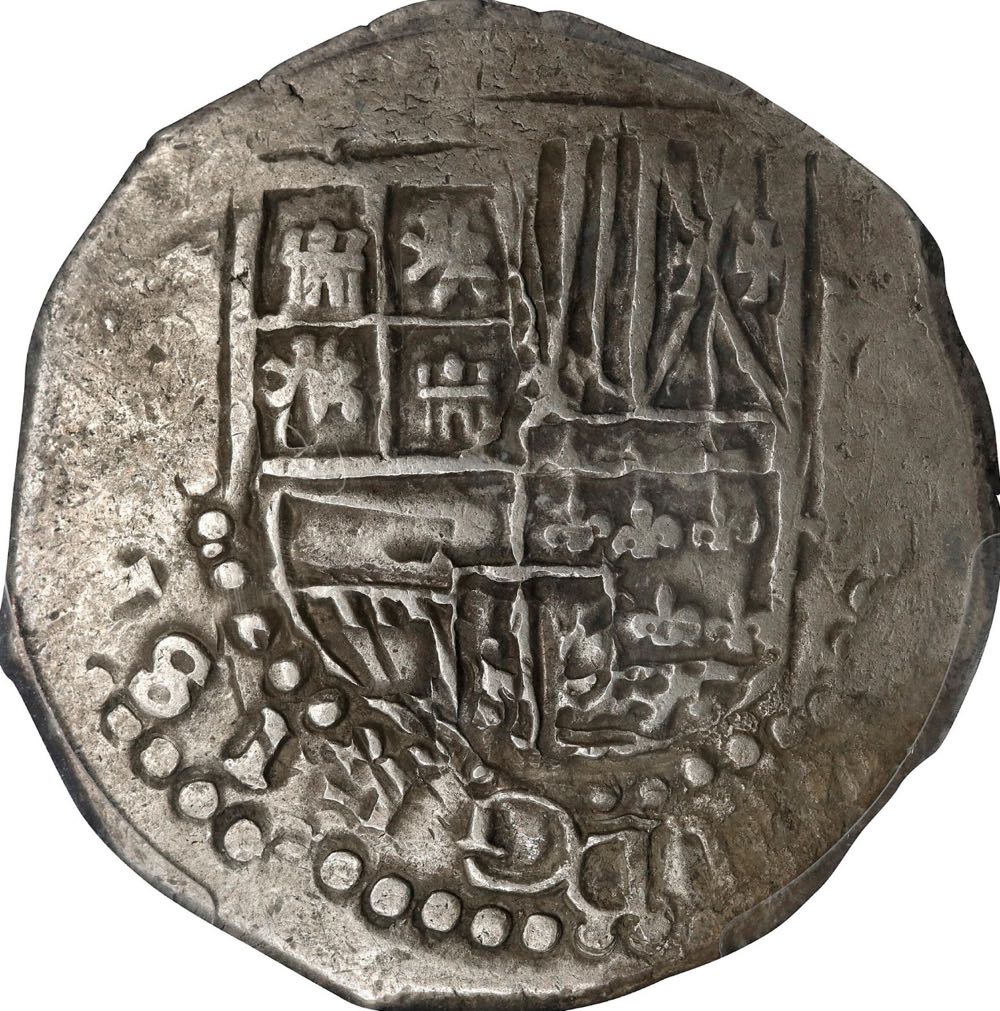
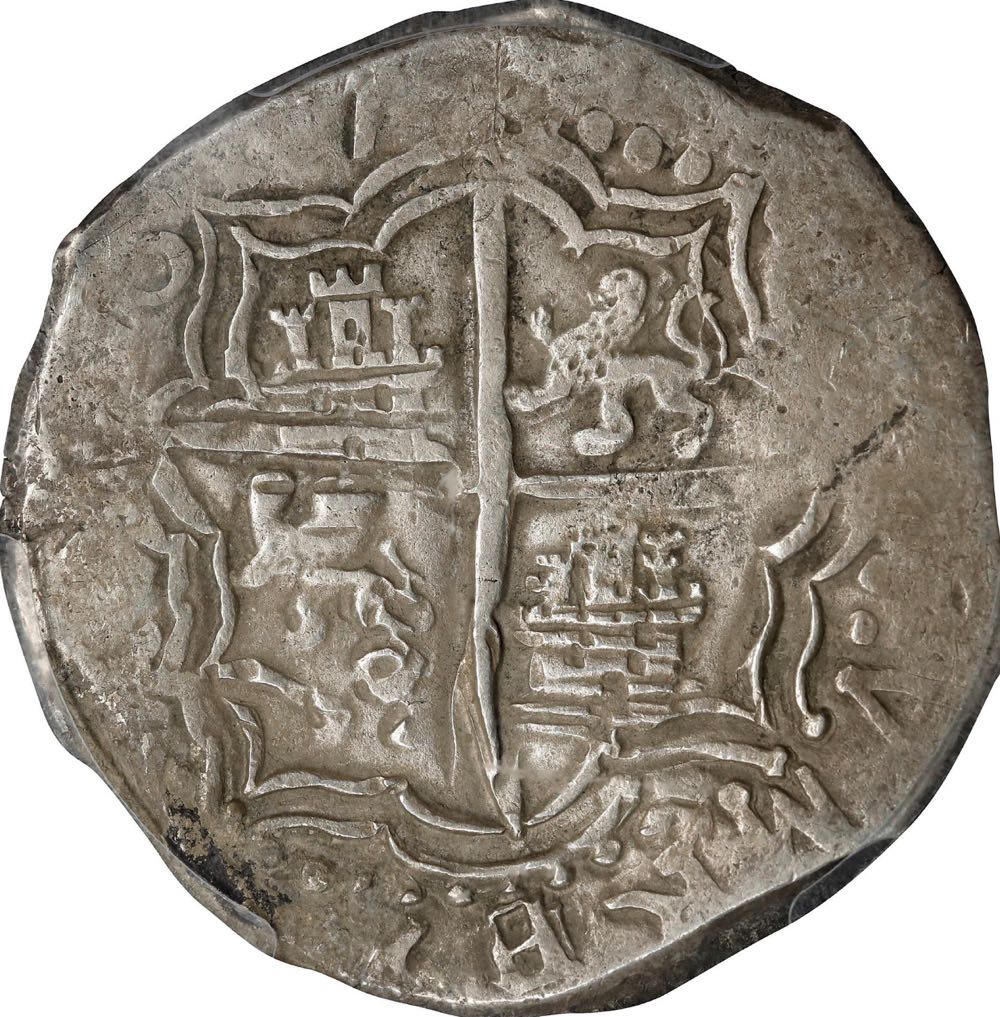
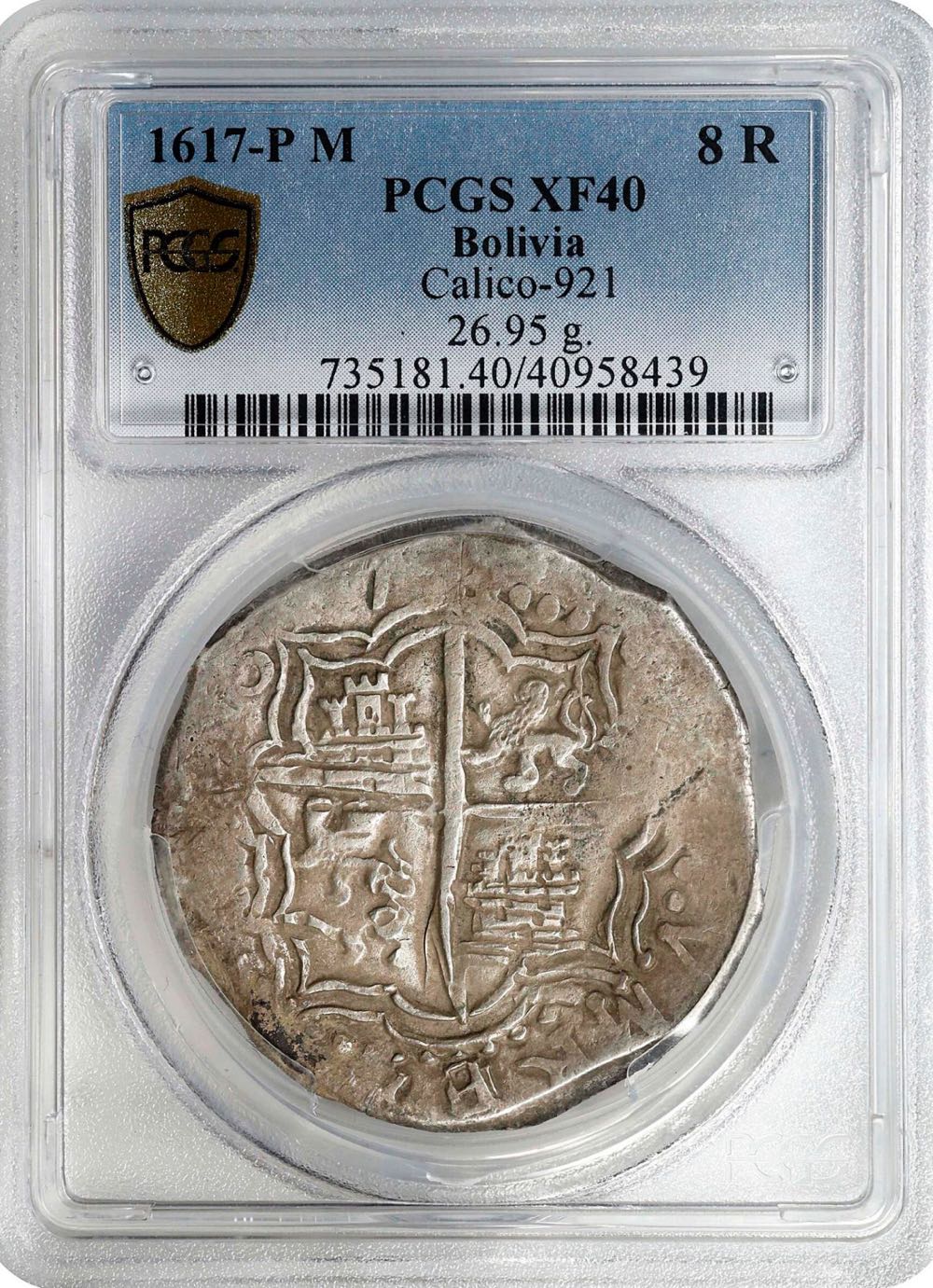
BOLIVIA. Cob 8 Reales, 1617-P M. Potosi Mint, Assayer Juan Sanchez Mejia (M). Philip III. PCGS EF-40.
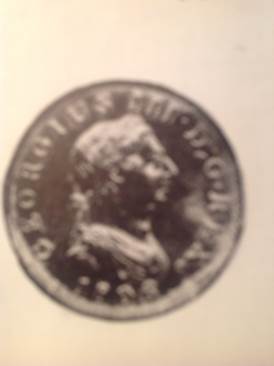
KM-10; Calico-921. Weight: 26.95 gms. The second and (most importantly) last digit is visible in the date, leading to the conclusion of the mint and assayer. The obverse retains much of the shield design and offers a glimpse of the legends between the six and eight o’clock locations. Much detail remains on the reverse including the partial date and partial legends. An attractive cob issue.
Estimate: $500 - $700.
Provenance: From the David Sterling Collection.
Between 1492 and the early 19th century, Spain extracted billions and billions of dollars’ worth of gold, silver, precious gems and other treasures from the Caribbean, Mexican and South American colonies. Treasure and other trade goods were loaded at the new Spanish ports in Panama, Colombia, Ecuador, Mexico, Peru and the Philippines, then shipped to Spain in large armed fleets of galleons.
The Spanish colonial mints at Potosí, Lima, Cartagena, Bogotá and Mexico City (plus a few others) labored day and night to produce the irregularly shaped gold and silver coins commonly referred to as macuquinas (crude hammered coins) or “cobs.” It is believed the word ”cob” is the simplification of the Spanish phrase ”cabo de barra,” meaning ”end of the bar,” as the blanks, or planchets, for these coins were actually sliced off the ends of silver bars straight from the mines, this is just another theory and not archival documation support the meaning. The planchets were then trimmed to prescribed weights and struck between crude dies, thus no two cobs are ever exactly alike! That is what makes these ”macuquinas” unique and really interesting to collect. Ironically, the Spanish Crown put its colonial mints to the trouble of striking coins only to have much of the coinage shipped to Spain and immediately remelted and restruck as Spanish coins. The point of coining the silver and gold in the New World was to better monitor and control its shipment. Some of the gold and silver coins (mostly the smaller denominations) were of course retained in the New World to serve the function of a local coinage.
Cobs were minted from the early 1500’s until the mid-18th century, when the mechanical press finally introduced modern milled coinage to the Spanish colonial mints. The era of milled coinage began first in Mexico in 1732, then about twenty years later in South America. Milled coins consist of two distinct types: Pillar dollars (and lower denominations), which display a very attractive and main design consisting of two pillars outside of two globes, struck in silver only and ending in 1771-2; and bust (or portrait) dollars (and lower denominations), which show the portrait of the current king as the main design, starting in 1772 in silver and in in 1732 in gold. All types of Spanish colonial coins were minted in denominations of 8, 4, 2, and 1 escudos in gold (plus the diminutive ½ escudo in the bust series only) and 8, 4, 2, 1, ½ and ¼ reales in silver. Copper coins were also occasionally struck in denominations of 4, 2, and 1 maravedis. The gold coins were commonly referred to as ”doubloons” and the dollar-sized silver coins as ”pieces of eight.” It is worth noting that while cobs and portrait-type coins were also minted in Spain, only the New World mints struck pillar dollars. Pillar dollars are therefore widely considered to be the first ”dollars” of the United States of America, which prescribed ”Spanish milled dollars” as official currency until 1857. The milled ”pillar dollar” should not be confused with the ”early pillars” and ”pillars and waves” designs in cobs.
By a royal statute first promulgated in the reign of Charles I of Spain, the official weights of the silver reales were as follows:
8 reales (cob) = 27.3 grams [0.96 ounces]
4 reales (cob) = 13.65 grams [0.48 ounces]
2 reales (cob) = 6.825 grams [0.24 ounces]
1 real (cob) = 3.4125 grams [0.12 ounces]
½ real (cob) = 1.70625 grams [0.06 ounces] (also known as medios)
¼ real (cob) = 0.853125 grams [0.03 ounces] (also known as cuartillos)
KM-10; Calico-921. Weight: 26.95 gms. The second and (most importantly) last digit is visible in the date, leading to the conclusion of the mint and assayer. The obverse retains much of the shield design and offers a glimpse of the legends between the six and eight o’clock locations. Much detail remains on the reverse including the partial date and partial legends. An attractive cob issue.
Estimate: $500 - $700.
Provenance: From the David Sterling Collection.
Between 1492 and the early 19th century, Spain extracted billions and billions of dollars’ worth of gold, silver, precious gems and other treasures from the Caribbean, Mexican and South American colonies. Treasure and other trade goods were loaded at the new Spanish ports in Panama, Colombia, Ecuador, Mexico, Peru and the Philippines, then shipped to Spain in large armed fleets of galleons.
The Spanish colonial mints at Potosí, Lima, Cartagena, Bogotá and Mexico City (plus a few others) labored day and night to produce the irregularly shaped gold and silver coins commonly referred to as macuquinas (crude hammered coins) or “cobs.” It is believed the word ”cob” is the simplification of the Spanish phrase ”cabo de barra,” meaning ”end of the bar,” as the blanks, or planchets, for these coins were actually sliced off the ends of silver bars straight from the mines, this is just another theory and not archival documation support the meaning. The planchets were then trimmed to prescribed weights and struck between crude dies, thus no two cobs are ever exactly alike! That is what makes these ”macuquinas” unique and really interesting to collect. Ironically, the Spanish Crown put its colonial mints to the trouble of striking coins only to have much of the coinage shipped to Spain and immediately remelted and restruck as Spanish coins. The point of coining the silver and gold in the New World was to better monitor and control its shipment. Some of the gold and silver coins (mostly the smaller denominations) were of course retained in the New World to serve the function of a local coinage.
Cobs were minted from the early 1500’s until the mid-18th century, when the mechanical press finally introduced modern milled coinage to the Spanish colonial mints. The era of milled coinage began first in Mexico in 1732, then about twenty years later in South America. Milled coins consist of two distinct types: Pillar dollars (and lower denominations), which display a very attractive and main design consisting of two pillars outside of two globes, struck in silver only and ending in 1771-2; and bust (or portrait) dollars (and lower denominations), which show the portrait of the current king as the main design, starting in 1772 in silver and in in 1732 in gold. All types of Spanish colonial coins were minted in denominations of 8, 4, 2, and 1 escudos in gold (plus the diminutive ½ escudo in the bust series only) and 8, 4, 2, 1, ½ and ¼ reales in silver. Copper coins were also occasionally struck in denominations of 4, 2, and 1 maravedis. The gold coins were commonly referred to as ”doubloons” and the dollar-sized silver coins as ”pieces of eight.” It is worth noting that while cobs and portrait-type coins were also minted in Spain, only the New World mints struck pillar dollars. Pillar dollars are therefore widely considered to be the first ”dollars” of the United States of America, which prescribed ”Spanish milled dollars” as official currency until 1857. The milled ”pillar dollar” should not be confused with the ”early pillars” and ”pillars and waves” designs in cobs.
By a royal statute first promulgated in the reign of Charles I of Spain, the official weights of the silver reales were as follows:
8 reales (cob) = 27.3 grams [0.96 ounces]
4 reales (cob) = 13.65 grams [0.48 ounces]
2 reales (cob) = 6.825 grams [0.24 ounces]
1 real (cob) = 3.4125 grams [0.12 ounces]
½ real (cob) = 1.70625 grams [0.06 ounces] (also known as medios)
¼ real (cob) = 0.853125 grams [0.03 ounces] (also known as cuartillos)
Country:
Bolivia
Year:
1617
Material:
Silver
Date Added:
2023-02-27 12:06:59
Automatic Estimated Date:
2025-01-13
Date Added:
2023-02-27 12:06:59