
Title:
2023 NZ Proof Coin Set - Native Bee - Ngaro Huruhuru
Description:
New Zealand is known around the world for its bee-related exports - mānuka honey, the Buzzy Bee toy and even live insects. Less known is the significance of New Zealand’s native bees - they don’t make honey, nor do they look much like the stereotypical specimen, but they are critical to our unique ecosystem.
There are nearly 20,000 bee species recognised around the world. New Zealand is home to just 40 of them, and most are endemic.
Most people’s impressions of bees involve hives, honey and orangey-brown and black stripes. The humble ngaro huruhuru subverts these expectations. To our eyes they might look more like flies than bees. The’re also. critical to the survival of our únique ecosystem.
Despite a global decline in bee populations, the growth of the manuka hohey industry has led to a rapid increase in honeybee hives in New Zealand. This has had an unfortunate impact® on native bees, who are now competing for food. However, it’s climate change, human treatment and the use of land that are the greater threats to our bees. People in New Zealand can help by buying produce that doesn’t use pesticides, and planting native trees for the bees to feed from and pollinate.
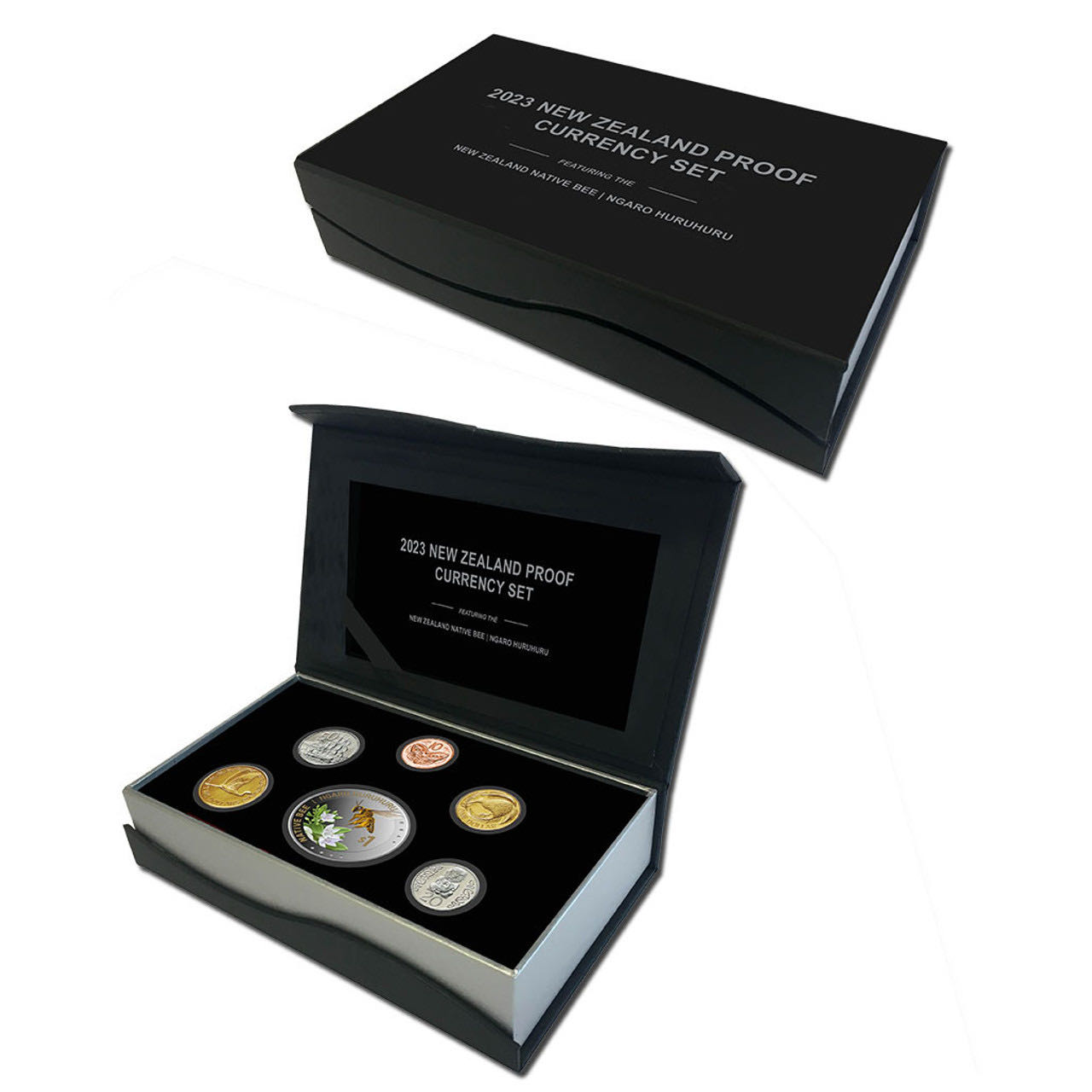
Featured alongside this commemorative loz silver proof coin are examples of New Zealand’s currency, specially dated 2023. The change to decimal currency in 1967 was the most fundamental shift of its kind since the first national notes and coins were issued in the early 1930s. The thinking behind the coin designs was largely shaped by cultural context, and this helped to define the themes explored during the drafting and design process.
With most of the 1967 designs still in use, today’s currency coins are a celebration of New Zealand’s identities, history and unique wildlife. New Zealand’s Māori culture is a vital part of our collective identity. The 10-cent coin features a Māori carved mask, known as - a ’koruru’, with rafter patterns. Traditionally, a koruru is carved into the gables of a meeting house, and is seen as the guardian of the house’.
The 20-cent coin portrays an 18th-century carving of Māori leader, Pukaki. After his passing he was depioted in a carving that featured as part of a gateway to strengthen the Ohinemutu community in preparation for attack.The carving can today be viewed in the entrance to the Rotorua District Council building. The 50-cent coin features HMS Endeavour, the ship on which Captain Cook arrived when he became the first Briton to reach New Zealand in October 1769.
New Zealand’s wildlife is celebrated on the one- and two-dollar-coins. The one-dollar coin features New Zealand’s national bird,-the kiwi, and the two-dollar coin features the kōtuku (white heron). In Māori oratory, referring to someone as a kōtuku is the highest compliment, as kōtuku are considered beautiful and rare.
Alongside a 1oz silver coin depicting a ngaro huruhuru - native bee - this set features proof versions of New Zealand’s circulating currency coins. Each coin is specially dated 2023. Collectively the coins feature many well-known New Zealand symbols such as the Māori carved mask, known as a ‘kōruru’ on the 10-cent coin, and the HMS Endeavour, the ship of Captain James Cook, on the 50-cent coin.
Highlights
- Beautiful proof versions of New Zealand’s decimal currency coins
- Features Her Majesty the late Queen Elizabeth II on the obverse
- Silver coin designed by Wellington artist Sacha Lees
- Low worldwide mintage of 750 sets
- Each coin is specially dated 2023
Design
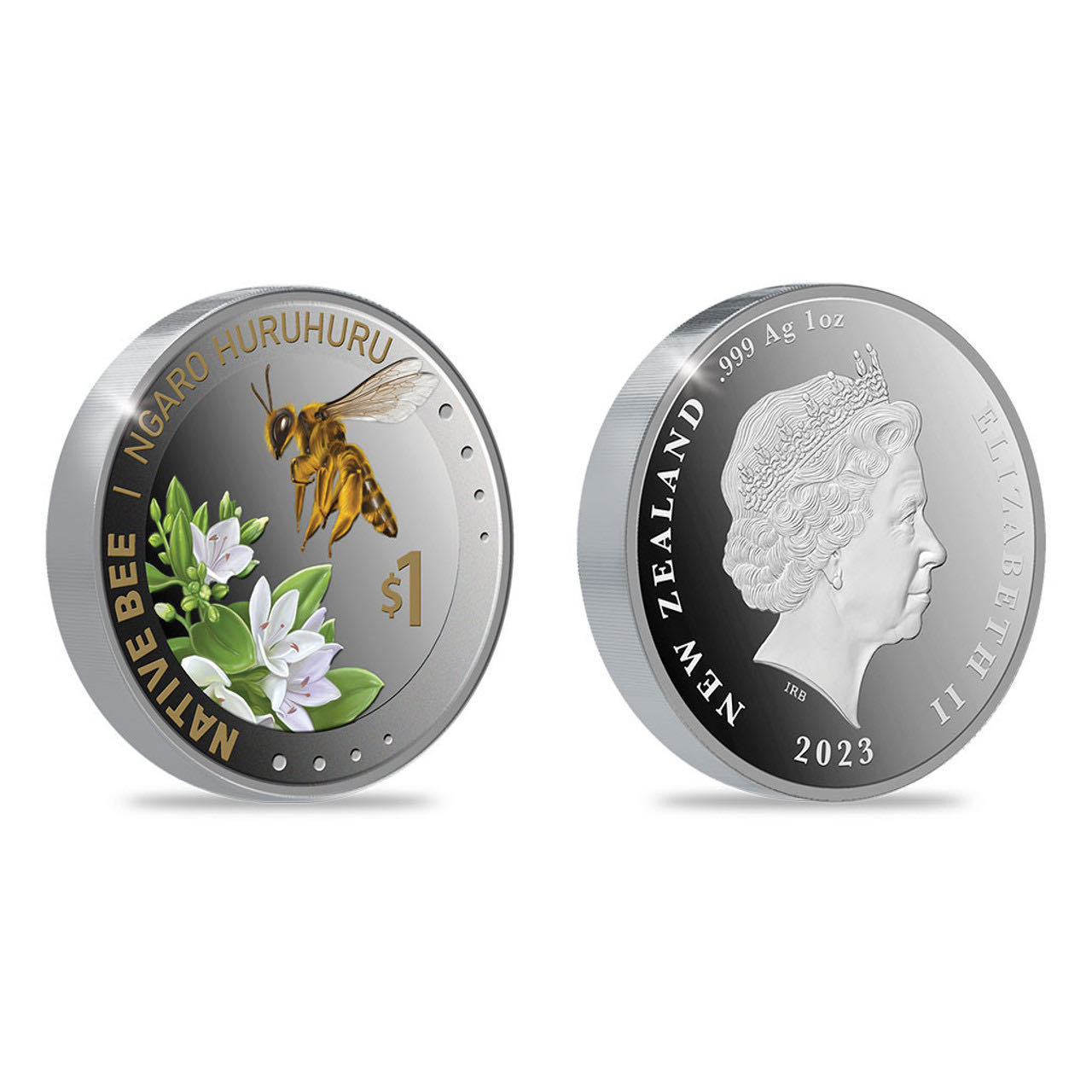
Of New Zealand’s bees, the Leioproctus genus is the best recognised. A maximum of 12 millimetres long, they look the most like honeybees. They’re all black except for Leioproctus fulvescens, which has dense orange-yellow hair. This species is featured on the coin, alongside the manuka flowers it pollinates. The coin features gold-plated text and a pattern of recessed circles on the edge representing the fact that the bees nest in the ground.
There are nearly 20,000 bee species recognised around the world. New Zealand is home to just 40 of them, and most are endemic.
Most people’s impressions of bees involve hives, honey and orangey-brown and black stripes. The humble ngaro huruhuru subverts these expectations. To our eyes they might look more like flies than bees. The’re also. critical to the survival of our únique ecosystem.
Despite a global decline in bee populations, the growth of the manuka hohey industry has led to a rapid increase in honeybee hives in New Zealand. This has had an unfortunate impact® on native bees, who are now competing for food. However, it’s climate change, human treatment and the use of land that are the greater threats to our bees. People in New Zealand can help by buying produce that doesn’t use pesticides, and planting native trees for the bees to feed from and pollinate.
Featured alongside this commemorative loz silver proof coin are examples of New Zealand’s currency, specially dated 2023. The change to decimal currency in 1967 was the most fundamental shift of its kind since the first national notes and coins were issued in the early 1930s. The thinking behind the coin designs was largely shaped by cultural context, and this helped to define the themes explored during the drafting and design process.
With most of the 1967 designs still in use, today’s currency coins are a celebration of New Zealand’s identities, history and unique wildlife. New Zealand’s Māori culture is a vital part of our collective identity. The 10-cent coin features a Māori carved mask, known as - a ’koruru’, with rafter patterns. Traditionally, a koruru is carved into the gables of a meeting house, and is seen as the guardian of the house’.
The 20-cent coin portrays an 18th-century carving of Māori leader, Pukaki. After his passing he was depioted in a carving that featured as part of a gateway to strengthen the Ohinemutu community in preparation for attack.The carving can today be viewed in the entrance to the Rotorua District Council building. The 50-cent coin features HMS Endeavour, the ship on which Captain Cook arrived when he became the first Briton to reach New Zealand in October 1769.
New Zealand’s wildlife is celebrated on the one- and two-dollar-coins. The one-dollar coin features New Zealand’s national bird,-the kiwi, and the two-dollar coin features the kōtuku (white heron). In Māori oratory, referring to someone as a kōtuku is the highest compliment, as kōtuku are considered beautiful and rare.
Alongside a 1oz silver coin depicting a ngaro huruhuru - native bee - this set features proof versions of New Zealand’s circulating currency coins. Each coin is specially dated 2023. Collectively the coins feature many well-known New Zealand symbols such as the Māori carved mask, known as a ‘kōruru’ on the 10-cent coin, and the HMS Endeavour, the ship of Captain James Cook, on the 50-cent coin.
Highlights
- Beautiful proof versions of New Zealand’s decimal currency coins
- Features Her Majesty the late Queen Elizabeth II on the obverse
- Silver coin designed by Wellington artist Sacha Lees
- Low worldwide mintage of 750 sets
- Each coin is specially dated 2023
Design
Of New Zealand’s bees, the Leioproctus genus is the best recognised. A maximum of 12 millimetres long, they look the most like honeybees. They’re all black except for Leioproctus fulvescens, which has dense orange-yellow hair. This species is featured on the coin, alongside the manuka flowers it pollinates. The coin features gold-plated text and a pattern of recessed circles on the edge representing the fact that the bees nest in the ground.
Country:
New Zealand
Year:
2023
Mintage:
729/750
Material:
Silver
Designers:
Ian Rank-Broadley
Royal Dutch Mint
BH Mayer’s Kunstprägeanstalt GmbH
Sacha Lees
Show More
Date Added:
2023-05-21 15:45:52
Automatic Estimated Date:
2024-05-12
Date Added:
2023-05-21 15:45:52