Title:
03 - 7” Single - Ultravox (10) - Vienna
Description:
Vienna (Ultravox song)
1981 single by Ultravox
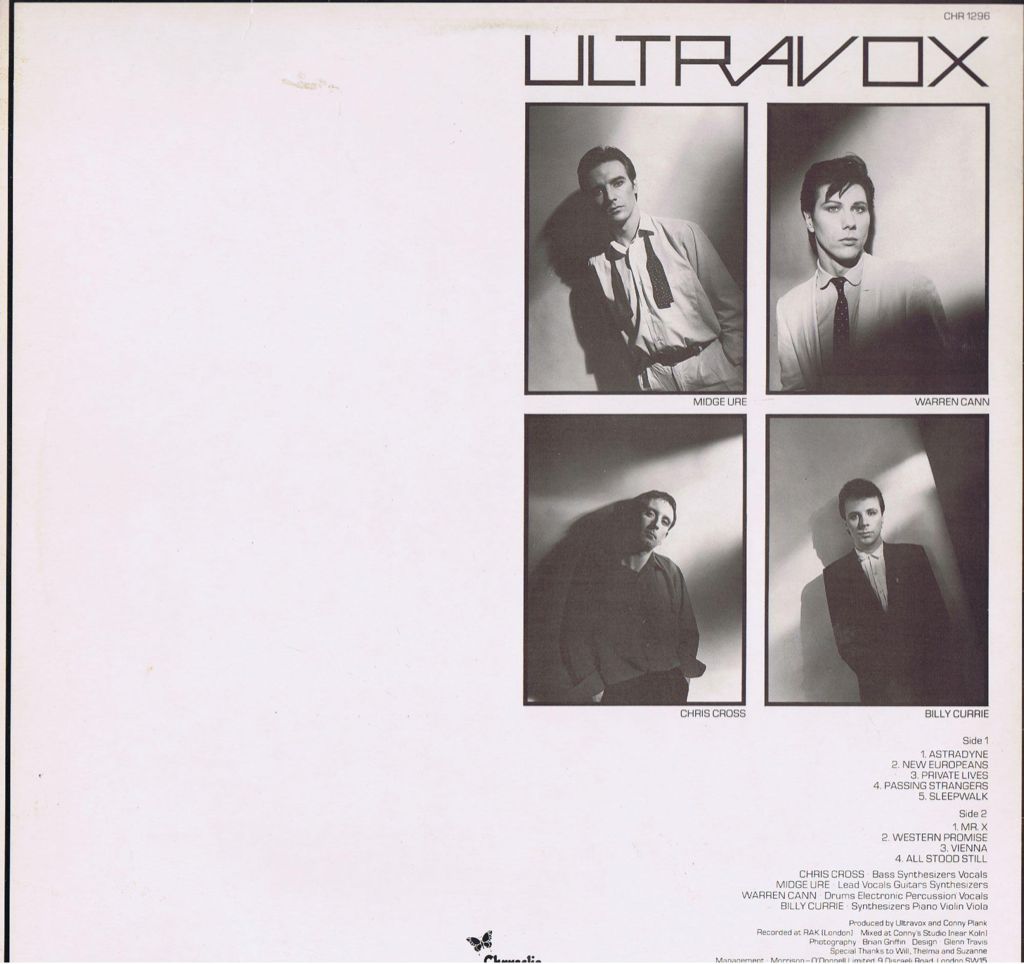
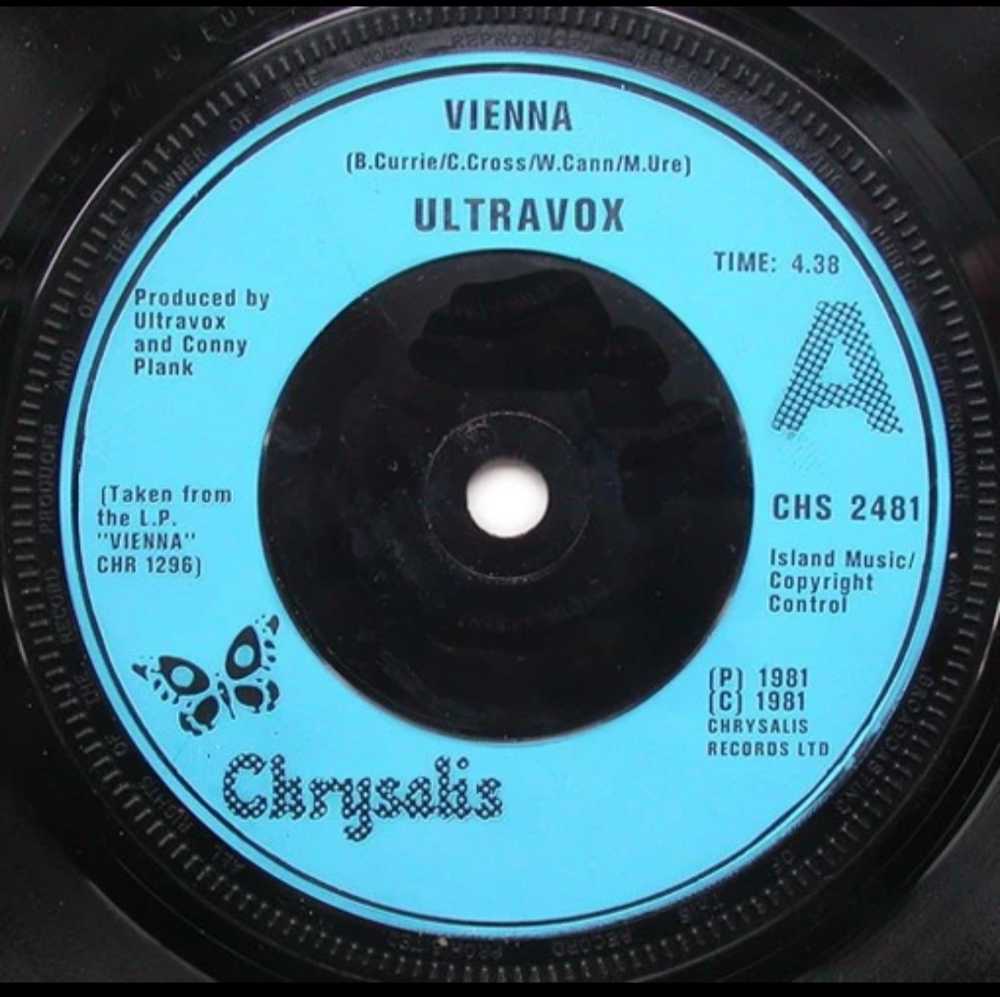
"Vienna” is a song by British new wave band Ultravox, released on 9 January 1981 by Chrysalis Records[4] as the third single and the title track from their fourth studio album of the same name. The new wave ballad,[2] which features Midge Ure on lead vocals, is regarded as a staple of the synth-pop genre that was popularised in the early 1980s, and remains both the band’s signature song and their most commercially successful release.
The song was also performed at the 1985 Live Aid concert in Wembley Stadium, and is often performed live by Ure in solo performances.
Background
Written in January 1980,[5] "Vienna” has a dramatic grand piano in the verses and chorus, and a viola solo in the middle of the song. Other sounds include a solid synth bass line played on a MiniMoog, an Elka string synthesiser and a Roland CR-78 drum machine. The drum machine pattern created by Warren Cann was the basis of the song.[6] Cann and the classically trained Billy Currie together wanted to create something that might sound like it had been written by a late-19th-century romantic composer, so they started creating the basic chords and sounds of the song, and the romantic viola solo was influenced by German composer Max Reger.[5]
The lyrics, which describe a brief love affair in the city of Vienna, were quickly written by Midge Ure. According to Currie, Ure was hesitant about the overly classical romantic feel of the orchestration, and said: "This means nothing to me”, to which the producer Conny Plank replied: "Well, sing that then.” Ure said that, when he went into the studio, he had in his mind only the line "The feeling is gone, this means nothing to me – oh Vienna!”.[5] Then he wrote the vocal part while bass player Chris Cross started playing some bass lines with his synthesizer.
In interviews at the time it was said that the song took its inspiration from the 1949 film The Third Man, which is based around the Austrian capital, but Midge Ure later admitted he made that up when asked what the song was about.[6] Ure is said to have been influenced by the Walker Brothers’ 1978 single "The Electrician”.[7] According to Ure’s autobiography, the title came about by a mishearing of the Fleetwood Mac song "Rhiannon”.[8]
Ure said of the track: "We wanted to take the song and make it incredibly pompous in the middle, leaving it very sparse before and after, but finishing with a typically over-the top classical ending."[9]
The band’s record company Chrysalis Records was reluctant to release "Vienna” as a single, thinking the song too slow and too long to be successful, but relented after the band persisted.
Release and chart performance
The single spent four consecutive weeks at No. 2 on the UK Singles Chart,[10] kept off the top spot by John Lennon’s "Woman” for a week[11] and then by Joe Dolce’s "Shaddap You Face” for a further three weeks.[12][13][14] It was certified gold by the British Phonographic Industry (BPI) in February 1981, denoting sales of over 500,000 copies in the UK,[4] and eventually became the UK’s sixth-best-selling single of 1981.[15] The single topped the charts in Belgium, Ireland and the Netherlands.[5]
It was voted Britain’s favourite single ever to peak at No. 2 on the charts in a 2012 poll by BBC Radio 2 and the Official Charts Company (OCC), and was also awarded an honorary No. 1 by the OCC.[16]
In 2017, Ure declined an opportunity to meet Dolce, saying: "I’ve had 40 years of people talking about Joe ’Bloody’ Dolce and I don’t want to spend what I’ve got left talking about when I met him."[17]
Music video
The music video, directed by Russell Mulcahy,[18] is particularly evocative of The Third Man. It was Ultravox’s second video, after "Passing Strangers” (also with Mulcahy), and cost £6,000–£7,000, footed by the band after Chrysalis refused to fund it.[19]
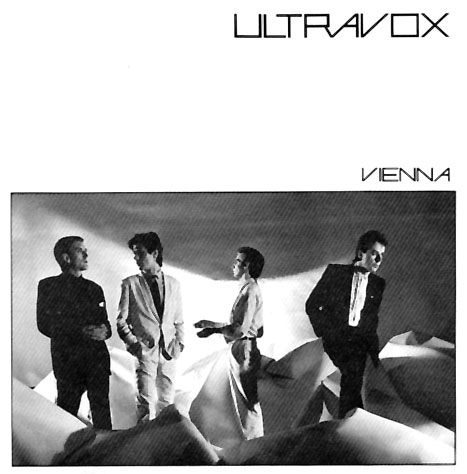
The gravestone that is shown in the video and on the single cover is part of the grave of the Austrian piano manufacturer Carl Schweighofer, and is located in the Zentralfriedhof in Vienna. The city’s cathedral and Michaelerplatz square also feature.[20]
B-sides
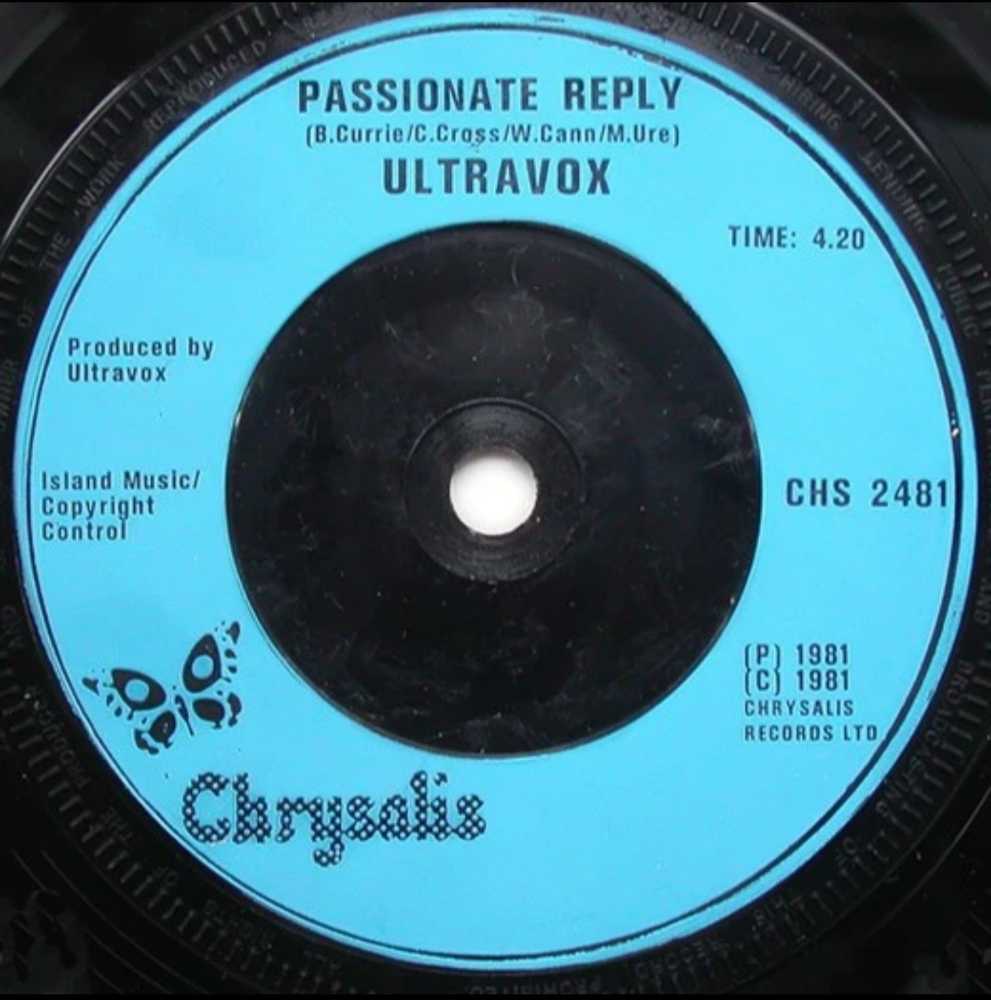
The B-side to the single is "Passionate Reply”. It was recorded in August 1980 at Criteria Studios in Miami, on their American tour.[19] Cann said to Jonas Wårstad about the track: "The B-side of the 7”, ’Passionate Reply’ was a promising song, perhaps it needed some ’living with’ before we would’ve considered it finished. As it was, we thought it made a good B-side."[21]
The 12-inch single includes "Herr X”, a version of the Kraftwerk-esque album track "Mr. X” sung entirely in German by Warren Cann with the aid of native German producer Conny Plank. Both tracks were included on the remastered CD version of the Vienna album as bonus tracks.
Reissue
In 1993 "Vienna” was re-released by Chrysalis, to promote the Midge Ure/Ultravox greatest hits compilation If I Was: The Very Best of Midge Ure & Ultravox. This reissue peaked at number 13 on the UK Singles Chart.[22] Like the compilation album, the single also included songs by Midge Ure (as B-sides).
1981 single by Ultravox
"Vienna” is a song by British new wave band Ultravox, released on 9 January 1981 by Chrysalis Records[4] as the third single and the title track from their fourth studio album of the same name. The new wave ballad,[2] which features Midge Ure on lead vocals, is regarded as a staple of the synth-pop genre that was popularised in the early 1980s, and remains both the band’s signature song and their most commercially successful release.
The song was also performed at the 1985 Live Aid concert in Wembley Stadium, and is often performed live by Ure in solo performances.
Background
Written in January 1980,[5] "Vienna” has a dramatic grand piano in the verses and chorus, and a viola solo in the middle of the song. Other sounds include a solid synth bass line played on a MiniMoog, an Elka string synthesiser and a Roland CR-78 drum machine. The drum machine pattern created by Warren Cann was the basis of the song.[6] Cann and the classically trained Billy Currie together wanted to create something that might sound like it had been written by a late-19th-century romantic composer, so they started creating the basic chords and sounds of the song, and the romantic viola solo was influenced by German composer Max Reger.[5]
The lyrics, which describe a brief love affair in the city of Vienna, were quickly written by Midge Ure. According to Currie, Ure was hesitant about the overly classical romantic feel of the orchestration, and said: "This means nothing to me”, to which the producer Conny Plank replied: "Well, sing that then.” Ure said that, when he went into the studio, he had in his mind only the line "The feeling is gone, this means nothing to me – oh Vienna!”.[5] Then he wrote the vocal part while bass player Chris Cross started playing some bass lines with his synthesizer.
In interviews at the time it was said that the song took its inspiration from the 1949 film The Third Man, which is based around the Austrian capital, but Midge Ure later admitted he made that up when asked what the song was about.[6] Ure is said to have been influenced by the Walker Brothers’ 1978 single "The Electrician”.[7] According to Ure’s autobiography, the title came about by a mishearing of the Fleetwood Mac song "Rhiannon”.[8]
Ure said of the track: "We wanted to take the song and make it incredibly pompous in the middle, leaving it very sparse before and after, but finishing with a typically over-the top classical ending."[9]
The band’s record company Chrysalis Records was reluctant to release "Vienna” as a single, thinking the song too slow and too long to be successful, but relented after the band persisted.
Release and chart performance
The single spent four consecutive weeks at No. 2 on the UK Singles Chart,[10] kept off the top spot by John Lennon’s "Woman” for a week[11] and then by Joe Dolce’s "Shaddap You Face” for a further three weeks.[12][13][14] It was certified gold by the British Phonographic Industry (BPI) in February 1981, denoting sales of over 500,000 copies in the UK,[4] and eventually became the UK’s sixth-best-selling single of 1981.[15] The single topped the charts in Belgium, Ireland and the Netherlands.[5]
It was voted Britain’s favourite single ever to peak at No. 2 on the charts in a 2012 poll by BBC Radio 2 and the Official Charts Company (OCC), and was also awarded an honorary No. 1 by the OCC.[16]
In 2017, Ure declined an opportunity to meet Dolce, saying: "I’ve had 40 years of people talking about Joe ’Bloody’ Dolce and I don’t want to spend what I’ve got left talking about when I met him."[17]
Music video
The music video, directed by Russell Mulcahy,[18] is particularly evocative of The Third Man. It was Ultravox’s second video, after "Passing Strangers” (also with Mulcahy), and cost £6,000–£7,000, footed by the band after Chrysalis refused to fund it.[19]
The gravestone that is shown in the video and on the single cover is part of the grave of the Austrian piano manufacturer Carl Schweighofer, and is located in the Zentralfriedhof in Vienna. The city’s cathedral and Michaelerplatz square also feature.[20]
B-sides
The B-side to the single is "Passionate Reply”. It was recorded in August 1980 at Criteria Studios in Miami, on their American tour.[19] Cann said to Jonas Wårstad about the track: "The B-side of the 7”, ’Passionate Reply’ was a promising song, perhaps it needed some ’living with’ before we would’ve considered it finished. As it was, we thought it made a good B-side."[21]
The 12-inch single includes "Herr X”, a version of the Kraftwerk-esque album track "Mr. X” sung entirely in German by Warren Cann with the aid of native German producer Conny Plank. Both tracks were included on the remastered CD version of the Vienna album as bonus tracks.
Reissue
In 1993 "Vienna” was re-released by Chrysalis, to promote the Midge Ure/Ultravox greatest hits compilation If I Was: The Very Best of Midge Ure & Ultravox. This reissue peaked at number 13 on the UK Singles Chart.[22] Like the compilation album, the single also included songs by Midge Ure (as B-sides).
Band or Artist:
Ultravox
Release Year:
1981
Length:
9
Country:
United Kingdom
Format:
7”
Speed:
N/A
Genre:
Classical
Rock
Pop
Electronica
Synthpop
Alternative
New Wave
Show More
Catalog Number:
CHS 2481
Producer:
Conny Plank
Ultravox
Show More
AllMusic Rating:
4.5
Record Label:
Chrysalis
Show More
Recording Location:
RAK Studios, London
Number of Tracks:
9
Album Type:
Album
Quality:
N/A
Number of Discs:
1
Date Added:
2018-06-28 16:52:31
Packaging:
Paper Sleeve
Series Order:
10
Date Added:
2018-06-28 16:52:31