Title:
Dare
Description:
Dare (album)
1981 studio album by the Human League
Dare (also released as Dare! in certain countries) is the third studio album by the English synth-pop band The Human League, first released in the United Kingdom in October 1981 and then subsequently in the US in mid-1982.[9] The album was produced by Martin Rushent and recorded between March and September 1981, following the departure of founding members Martyn Ware and Ian Craig Marsh, and saw the band shift direction from their previous avant-garde electronic style toward a more pop-friendly, commercial sound led by frontman Philip Oakey.[10]
Dare (album)
1981 studio album by the Human League
Dare (also released as Dare! in certain countries) is the third studio album by the English synth-pop band The Human League, first released in the United Kingdom in October 1981 and then subsequently in the US in mid-1982.[9] The album was produced by Martin Rushent and recorded between March and September 1981, following the departure of founding members Martyn Ware and Ian Craig Marsh, and saw the band shift direction from their previous avant-garde electronic style toward a more pop-friendly, commercial sound led by frontman Philip Oakey.[10]
Quick Facts Studio album by the Human League, Released ...
Dare became critically acclaimed and proved to be a genre-defining album, whose influence can be felt in many areas of pop music.[11] The album and its four singles were very successful, particularly "Don’t You Want Me”, which both Rolling Stone and The Village Voice credited with kickstarting the Second British Invasion.[12][13] The album reached number one on the UK Albums Chart and has been certified triple platinum by the British Phonographic Industry (BPI).
A remix album based on Dare, named Love and Dancing, again produced by Martin Rushent was released in 1982. This included remixes of tracks from the Dare album in a continuous mega mix style which was groundbreaking at the time and according to Martin Rushent was very time-consuming to make.
History
In January 1981, the Human League consisted of Phlip Oakey and Philip Adrian Wright with newly-recruited teenage dancers/backing vocalists Joanne Catherall and Susan Ann Sulley. After the acrimonious split of the original band in October 1980 and the subsequent recruitment of Sulley and Catherall, the new band had only just survived a European tour by temporarily bringing in session keyboardist Ian Burden to assist them. As a result, the band was in substantial debt and only barely commercially viable. Under pressure from Virgin Records to produce results, original members Oakey and Wright returned to Monumental Studios in Sheffield to start recording demos. The track "Boys and Girls” from the 1980 tour, which Virgin released as a single, was more reminiscent of the band’s earlier work. Sulley and Catherall, who were busy studying for their A-levels, appeared on the cover of the single but did not perform on the track itself. "Boys and Girls” peaked at number 47 on the UK Singles Chart. Afterwards, Oakey would bring in outside personnel to take the band in a more pop and commercial-sounding direction.
Oakey’s first move was to invite guitarist and keyboard player Ian Burden from their 1980 tour to join the band full-time. Virgin had suggested that Oakey needed professional production and paired him with veteran producer Martin Rushent. He would move the band to his Genetic Sound Studios in rural Berkshire both due to the "unhealthy” atmosphere at Monumental Studios in Sheffield caused by the Human League sharing it with Heaven 17, and that Rushent’s studios were better equipped for the type of music the band was making. A downside would be that the distance would cause problems for Sulley and Catherall who were taking their final school exams at the time and had to be regularly bussed down from Sheffield.[14] In the studio, the songs were built up from a simple Linn LM-1 drum pattern, with the arrangements written out on a chart as they went along: each note was considered carefully at some point for the best emotional effect, as per Rushent’s style. Each song took a week, with the final drum parts recorded last to tape with all the drum fills in place.[15]
The first result of their recording sessions was released in April 1981 entitled "The Sound of the Crowd”. The final addition to the band would be Jo Callis, the former guitarist and songwriter of the punk rock band the Rezillos.
The first release from the now-complete new team came in July 1981, "Love Action (I Believe in Love)”, which peaked at number three in the UK. By September 1981, the album was finished and provisionally entitled Dare, after a Vogue magazine cover (U.K., April 1979, Gia Carangi). Oakey explained the story behind the album name at the time:
I like it because the Mekons used to have a song called "Dan Dare”. In fact, it was ripped off from a cover of Vogue about two and a half years ago. They had a whole series of covers which featured just one word like "Success”, "Red” and "Dare”. I shouldn’t say that, should I?[16]
To prepare for the album’s release (set for the end of October 1981), "Open Your Heart” was released - it went to number six in the UK. It was accompanied by a high-end promotional video. When the album was released, it was condemned by the Musicians’ Union, who, among other concerns, felt that the new technology employed by the Human League would make traditional musicians redundant. They mounted a "Keep It Live” campaign, believing that bands like the Human League would be able to perform concerts at the touch of a button.[14]
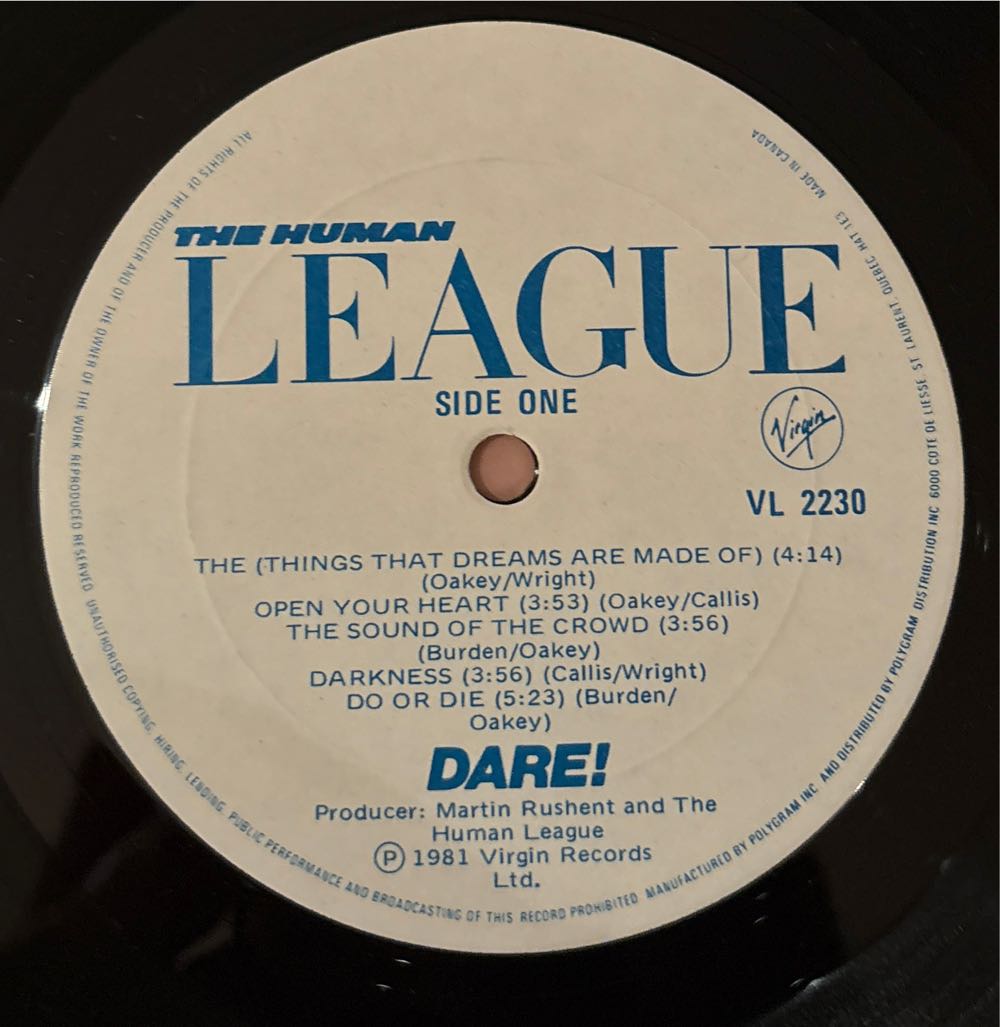
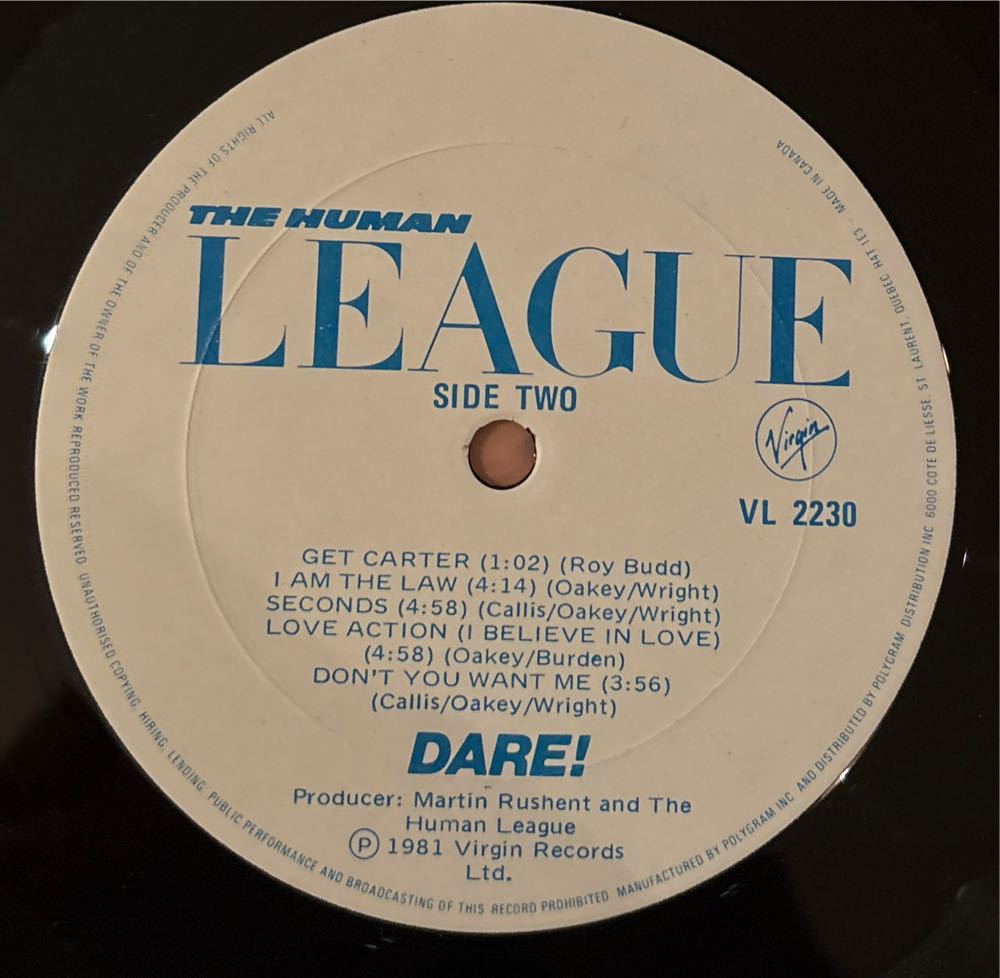
Virgin executive Simon Draper’s next choice would be the track "Don’t You Want Me”, the duet that Oakey had recorded with teenage backing singer Susanne Sulley. Oakey was unhappy with the decision and originally fought it, believing it to be the weakest track on Dare; for that reason, it had been relegated to the last track on the B-side of the vinyl album. Oakey was eventually overruled by Virgin.[14] It would go on to become the band’s most successful hit, selling millions of copies worldwide and becoming the 25th highest-selling single in the UK (as of 2007).[17] It was also the Christmas number one for 1981.
Release
The album was a massive commercial success, reaching number one on the UK Albums Chart in its second week of release. The album’s release was expected to be the climax of an enormously successful year for the band, but Virgin Records’ Simon Draper decided he wanted an additional single from the album before the end of the year.[14] By Christmas 1981, Dare had gone platinum in the UK, and the Human League had a number-one album and number-one single concurrently on the UK charts. Dare would eventually remain on the UK Albums Chart for 71 weeks.[17] A remix album, called Love and Dancing, was released in July 1982.
International releases
The single "Don’t You Want Me” was released with an expensive and elaborate promotional video created by film-maker Steve Barron. Music videos were a relatively new phenomenon, and cable TV station MTV had only just started to capitalise on this new media, although having very little material to work with. Virgin Records syndicated the video to MTV, and it was played around the clock. Because of the interest the video generated in "Don’t You Want Me”, Virgin licensed the release in the US of the single and the album. The licensee for the US was A&M Records, which renamed the album Dare! The addition of the exclamation mark was because A&M wanted to differentiate their (US) release from Virgin’s original release in the UK. The release of Dare! immediately mirrored the success of the UK; and in mid-1982 it reached number three on the US Billboard 200 and the single "Don’t You Want Me” went to number one on the Billboard Hot 100. Although critics were not as universally applauding as in the UK, the commercial success of Dare! would set the scene for the band’s return to the US charts several times in later years.
Dare earned considerable income for record labels Virgin and A&M; in Virgin’s case, it gave the label its first chart-topping album since Mike Oldfield’s Tubular Bells in 1973. "Don’t You Want Me” was the label’s first-ever chart-topping single. The success of Dare was responsible for saving the label from impending bankruptcy. A very grateful Richard Branson sent Philip Oakey a motorcycle as a thank-you present, but Oakey had to return it as he couldn’t ride it.[14]
As well as the commercial success in the US under A&M, in 1982 Dare was also highly successful in Australia, Japan, France and Germany. Dare has been re-released several times since its original creation. The 1997 U.S. CD release on Caroline Records included the additional B-side tracks "Hard Times” and "Non-Stop”. In 2002 (UK)/2003 (U.S.), another re-release combined Dare and Love and Dancing on one CD. In 2012, a 2-CD box set compiled Dare, several bonus remixes and an expanded version of the Fascination! EP, which was released separately in Japan in 2015.[18]
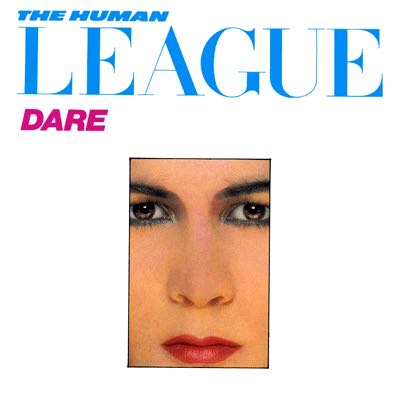
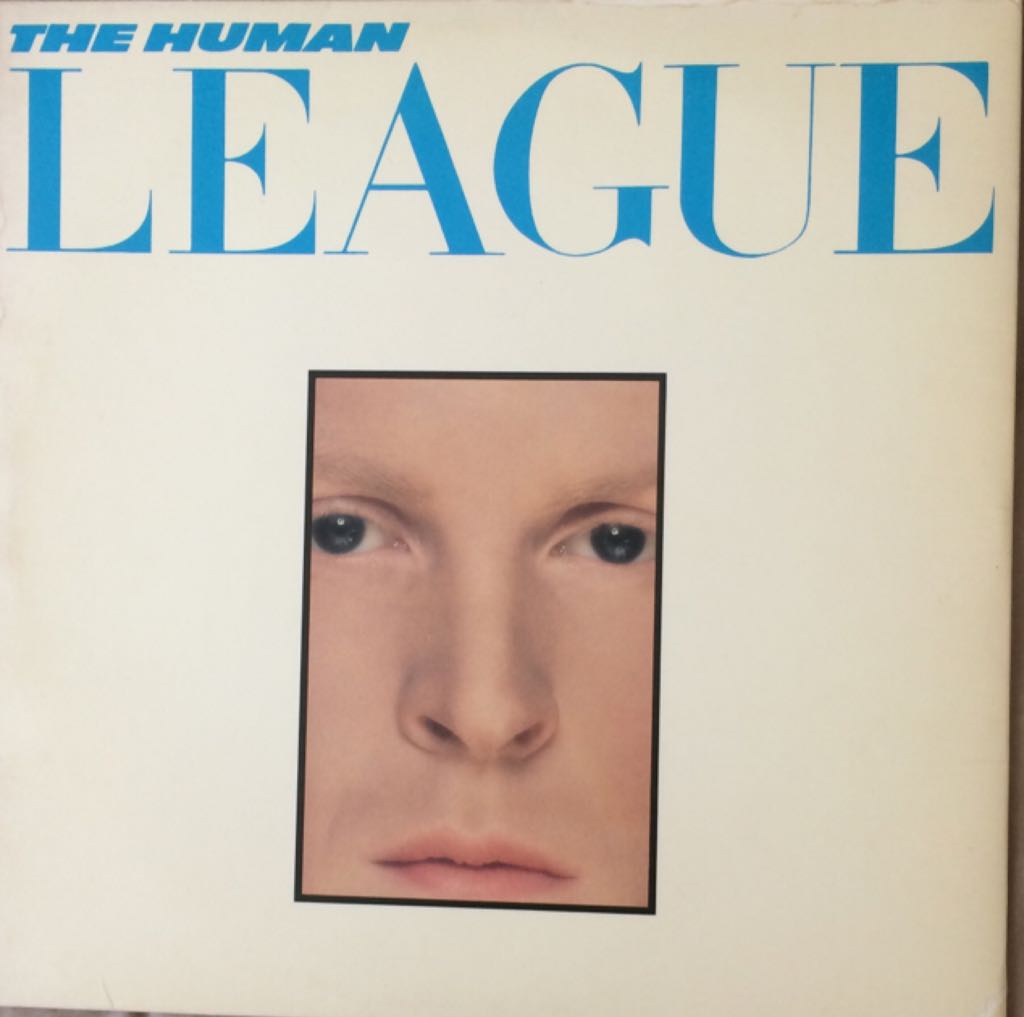
The cover art and other album artwork are based on a concept that Oakey wanted, that the album should look like an issue of Vogue. The final design was a joint effort between Philip Adrian Wright (also the band’s director of visuals) and graphic designer Ken Ansell. Its typography and design closely resemble the cover of German Vogue’s May 1981 issue, featuring Paulina Porizkova. Oakey is solo on the front cover with Sulley and Catherall on the internal gatefold, Wright on the back cover, and Callis and Burden on the inner sleeve. The artwork has been reproduced in numerous forms for various re-releases and sold as posters.[19]
Explaining why the band’s portraits are close-cropped and the girls with their hair tied back, Susan Ann Sulley explains, "We wanted people to still be able to buy the album in five years, we thought that hair styles would be the first thing to date. We had no idea people would sti
1981 studio album by the Human League
Dare (also released as Dare! in certain countries) is the third studio album by the English synth-pop band The Human League, first released in the United Kingdom in October 1981 and then subsequently in the US in mid-1982.[9] The album was produced by Martin Rushent and recorded between March and September 1981, following the departure of founding members Martyn Ware and Ian Craig Marsh, and saw the band shift direction from their previous avant-garde electronic style toward a more pop-friendly, commercial sound led by frontman Philip Oakey.[10]
Dare (album)
1981 studio album by the Human League
Dare (also released as Dare! in certain countries) is the third studio album by the English synth-pop band The Human League, first released in the United Kingdom in October 1981 and then subsequently in the US in mid-1982.[9] The album was produced by Martin Rushent and recorded between March and September 1981, following the departure of founding members Martyn Ware and Ian Craig Marsh, and saw the band shift direction from their previous avant-garde electronic style toward a more pop-friendly, commercial sound led by frontman Philip Oakey.[10]
Quick Facts Studio album by the Human League, Released ...
Dare became critically acclaimed and proved to be a genre-defining album, whose influence can be felt in many areas of pop music.[11] The album and its four singles were very successful, particularly "Don’t You Want Me”, which both Rolling Stone and The Village Voice credited with kickstarting the Second British Invasion.[12][13] The album reached number one on the UK Albums Chart and has been certified triple platinum by the British Phonographic Industry (BPI).
A remix album based on Dare, named Love and Dancing, again produced by Martin Rushent was released in 1982. This included remixes of tracks from the Dare album in a continuous mega mix style which was groundbreaking at the time and according to Martin Rushent was very time-consuming to make.
History
In January 1981, the Human League consisted of Phlip Oakey and Philip Adrian Wright with newly-recruited teenage dancers/backing vocalists Joanne Catherall and Susan Ann Sulley. After the acrimonious split of the original band in October 1980 and the subsequent recruitment of Sulley and Catherall, the new band had only just survived a European tour by temporarily bringing in session keyboardist Ian Burden to assist them. As a result, the band was in substantial debt and only barely commercially viable. Under pressure from Virgin Records to produce results, original members Oakey and Wright returned to Monumental Studios in Sheffield to start recording demos. The track "Boys and Girls” from the 1980 tour, which Virgin released as a single, was more reminiscent of the band’s earlier work. Sulley and Catherall, who were busy studying for their A-levels, appeared on the cover of the single but did not perform on the track itself. "Boys and Girls” peaked at number 47 on the UK Singles Chart. Afterwards, Oakey would bring in outside personnel to take the band in a more pop and commercial-sounding direction.
Oakey’s first move was to invite guitarist and keyboard player Ian Burden from their 1980 tour to join the band full-time. Virgin had suggested that Oakey needed professional production and paired him with veteran producer Martin Rushent. He would move the band to his Genetic Sound Studios in rural Berkshire both due to the "unhealthy” atmosphere at Monumental Studios in Sheffield caused by the Human League sharing it with Heaven 17, and that Rushent’s studios were better equipped for the type of music the band was making. A downside would be that the distance would cause problems for Sulley and Catherall who were taking their final school exams at the time and had to be regularly bussed down from Sheffield.[14] In the studio, the songs were built up from a simple Linn LM-1 drum pattern, with the arrangements written out on a chart as they went along: each note was considered carefully at some point for the best emotional effect, as per Rushent’s style. Each song took a week, with the final drum parts recorded last to tape with all the drum fills in place.[15]
The first result of their recording sessions was released in April 1981 entitled "The Sound of the Crowd”. The final addition to the band would be Jo Callis, the former guitarist and songwriter of the punk rock band the Rezillos.
The first release from the now-complete new team came in July 1981, "Love Action (I Believe in Love)”, which peaked at number three in the UK. By September 1981, the album was finished and provisionally entitled Dare, after a Vogue magazine cover (U.K., April 1979, Gia Carangi). Oakey explained the story behind the album name at the time:
I like it because the Mekons used to have a song called "Dan Dare”. In fact, it was ripped off from a cover of Vogue about two and a half years ago. They had a whole series of covers which featured just one word like "Success”, "Red” and "Dare”. I shouldn’t say that, should I?[16]
To prepare for the album’s release (set for the end of October 1981), "Open Your Heart” was released - it went to number six in the UK. It was accompanied by a high-end promotional video. When the album was released, it was condemned by the Musicians’ Union, who, among other concerns, felt that the new technology employed by the Human League would make traditional musicians redundant. They mounted a "Keep It Live” campaign, believing that bands like the Human League would be able to perform concerts at the touch of a button.[14]
Virgin executive Simon Draper’s next choice would be the track "Don’t You Want Me”, the duet that Oakey had recorded with teenage backing singer Susanne Sulley. Oakey was unhappy with the decision and originally fought it, believing it to be the weakest track on Dare; for that reason, it had been relegated to the last track on the B-side of the vinyl album. Oakey was eventually overruled by Virgin.[14] It would go on to become the band’s most successful hit, selling millions of copies worldwide and becoming the 25th highest-selling single in the UK (as of 2007).[17] It was also the Christmas number one for 1981.
Release
The album was a massive commercial success, reaching number one on the UK Albums Chart in its second week of release. The album’s release was expected to be the climax of an enormously successful year for the band, but Virgin Records’ Simon Draper decided he wanted an additional single from the album before the end of the year.[14] By Christmas 1981, Dare had gone platinum in the UK, and the Human League had a number-one album and number-one single concurrently on the UK charts. Dare would eventually remain on the UK Albums Chart for 71 weeks.[17] A remix album, called Love and Dancing, was released in July 1982.
International releases
The single "Don’t You Want Me” was released with an expensive and elaborate promotional video created by film-maker Steve Barron. Music videos were a relatively new phenomenon, and cable TV station MTV had only just started to capitalise on this new media, although having very little material to work with. Virgin Records syndicated the video to MTV, and it was played around the clock. Because of the interest the video generated in "Don’t You Want Me”, Virgin licensed the release in the US of the single and the album. The licensee for the US was A&M Records, which renamed the album Dare! The addition of the exclamation mark was because A&M wanted to differentiate their (US) release from Virgin’s original release in the UK. The release of Dare! immediately mirrored the success of the UK; and in mid-1982 it reached number three on the US Billboard 200 and the single "Don’t You Want Me” went to number one on the Billboard Hot 100. Although critics were not as universally applauding as in the UK, the commercial success of Dare! would set the scene for the band’s return to the US charts several times in later years.
Dare earned considerable income for record labels Virgin and A&M; in Virgin’s case, it gave the label its first chart-topping album since Mike Oldfield’s Tubular Bells in 1973. "Don’t You Want Me” was the label’s first-ever chart-topping single. The success of Dare was responsible for saving the label from impending bankruptcy. A very grateful Richard Branson sent Philip Oakey a motorcycle as a thank-you present, but Oakey had to return it as he couldn’t ride it.[14]
As well as the commercial success in the US under A&M, in 1982 Dare was also highly successful in Australia, Japan, France and Germany. Dare has been re-released several times since its original creation. The 1997 U.S. CD release on Caroline Records included the additional B-side tracks "Hard Times” and "Non-Stop”. In 2002 (UK)/2003 (U.S.), another re-release combined Dare and Love and Dancing on one CD. In 2012, a 2-CD box set compiled Dare, several bonus remixes and an expanded version of the Fascination! EP, which was released separately in Japan in 2015.[18]
The cover art and other album artwork are based on a concept that Oakey wanted, that the album should look like an issue of Vogue. The final design was a joint effort between Philip Adrian Wright (also the band’s director of visuals) and graphic designer Ken Ansell. Its typography and design closely resemble the cover of German Vogue’s May 1981 issue, featuring Paulina Porizkova. Oakey is solo on the front cover with Sulley and Catherall on the internal gatefold, Wright on the back cover, and Callis and Burden on the inner sleeve. The artwork has been reproduced in numerous forms for various re-releases and sold as posters.[19]
Explaining why the band’s portraits are close-cropped and the girls with their hair tied back, Susan Ann Sulley explains, "We wanted people to still be able to buy the album in five years, we thought that hair styles would be the first thing to date. We had no idea people would sti
Band or Artist:
Human League, The
Release Year:
1981
Length:
1
Country:
United Kingdom
Format:
12”
Speed:
33 1/3 rpm
Genre:
Synthpop
New Wave
Show More
Subgenre:
1980’s
Catalog Number:
V2192
Producer:
Martin Rushent
The Human League
Martin Rushent and The Human League
Show More
AllMusic Rating:
4
Record Label:
Virgin
Show More
Recording Location:
Genetic Sound
Number of Tracks:
12
Album Type:
Album
Quality:
N/A
Number of Discs:
1
Date Added:
2018-06-28 17:04:50
Packaging:
Vinyl Sleeve
Series Order:
3
Automatic Estimated Date:
2026-01-21
Date Added:
2018-06-28 17:04:50