Title:
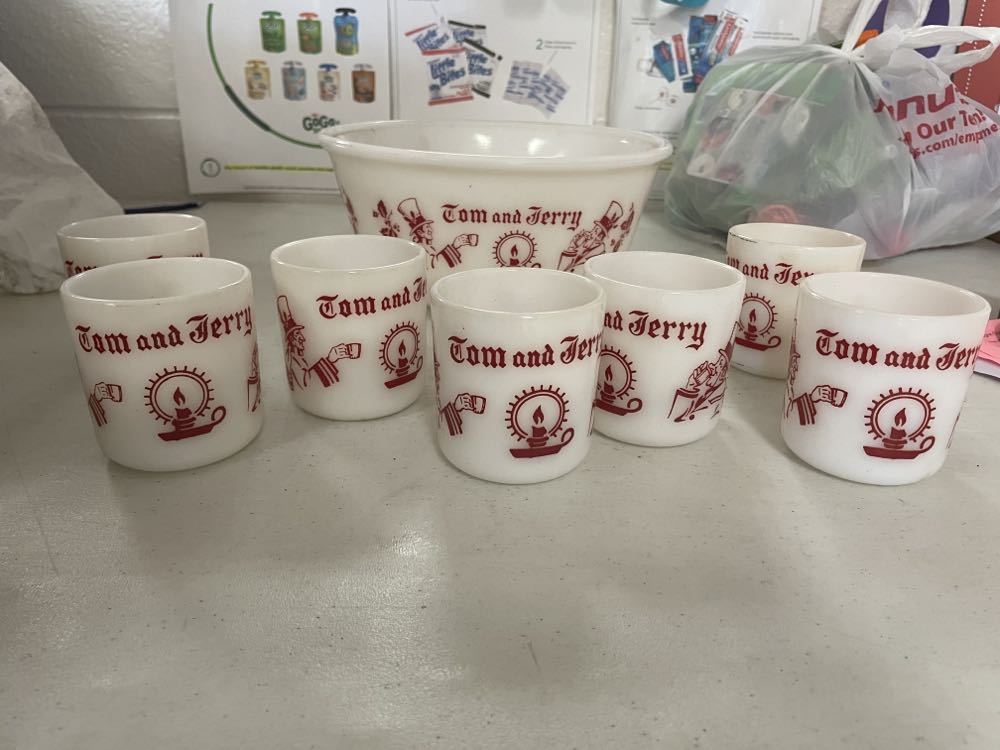
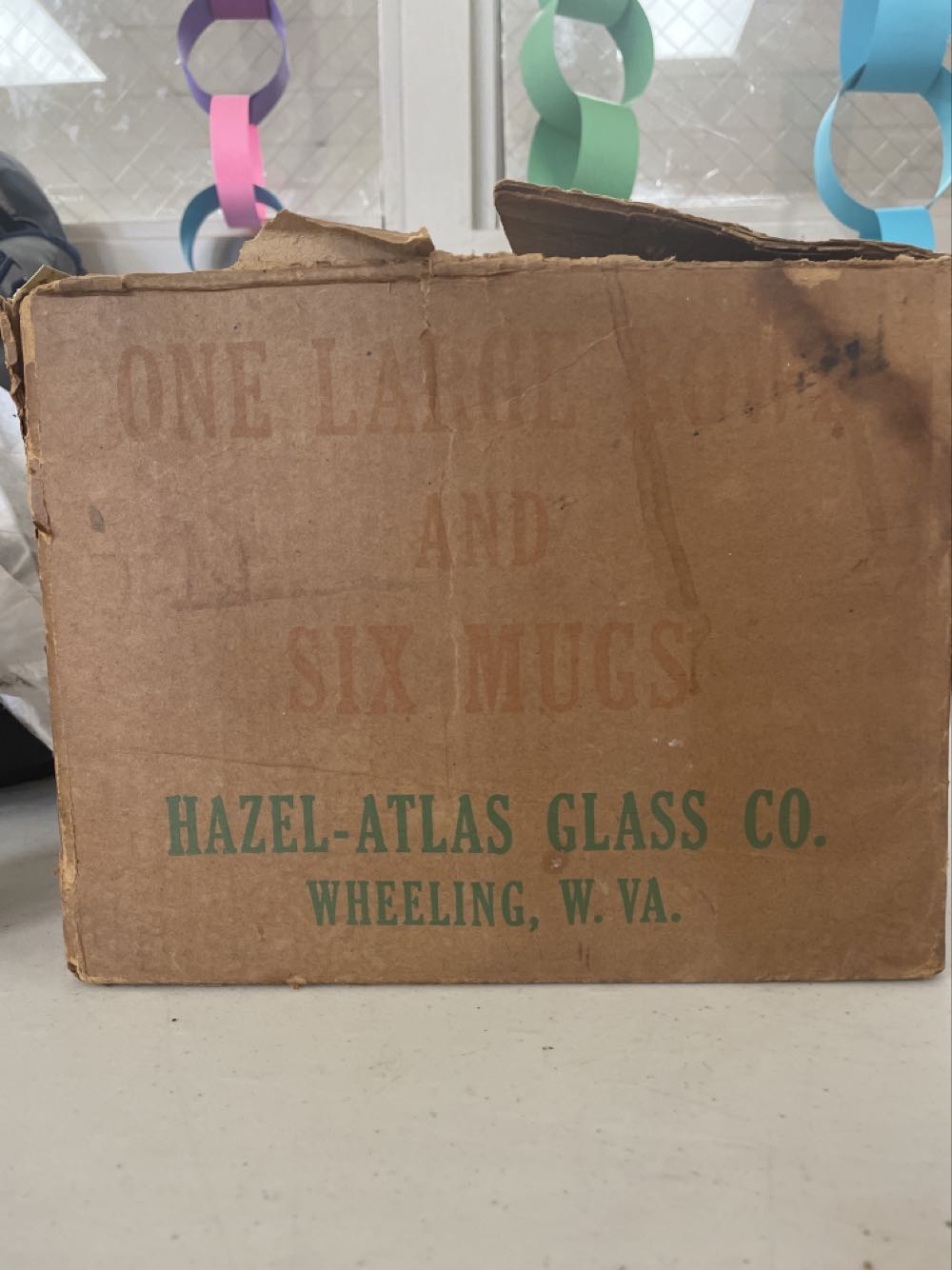
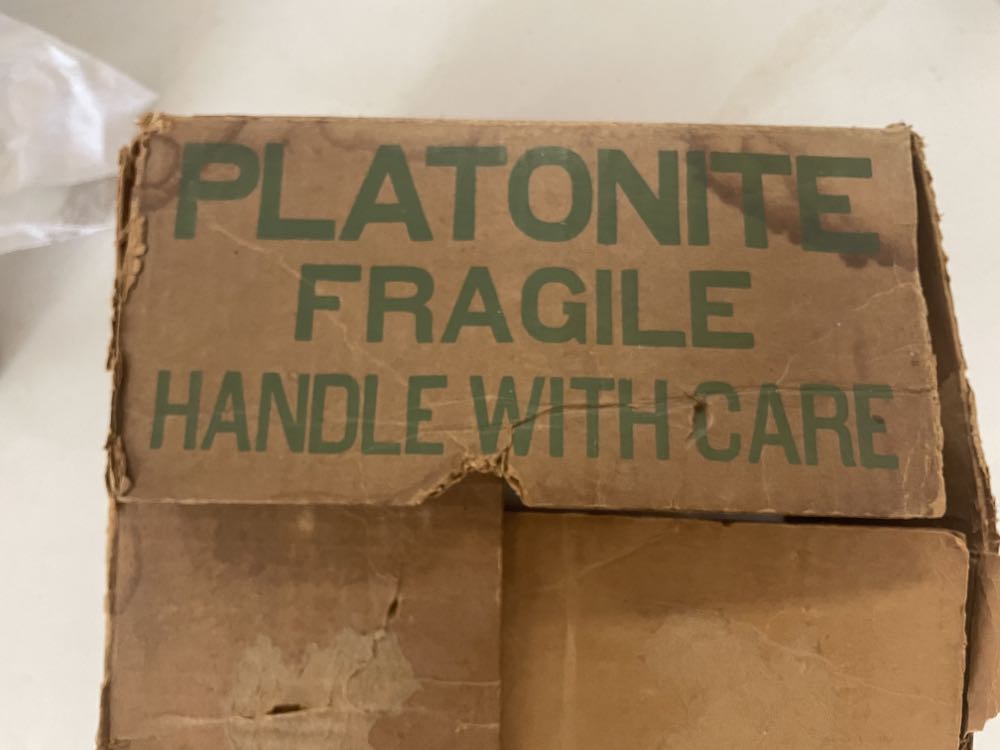
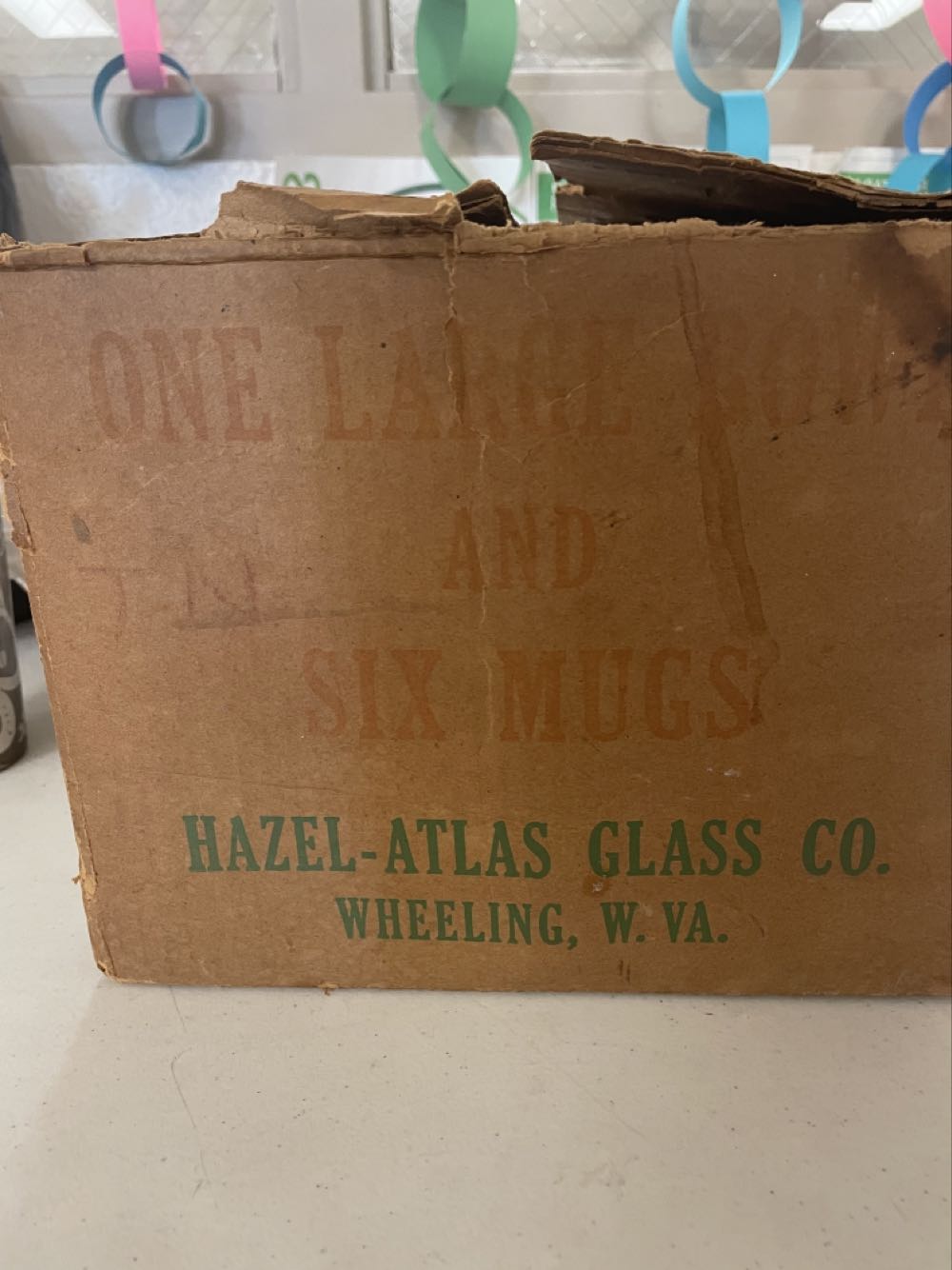
Hazel Atlas - Platonite - Tom & Jerry - 7 Piece Set
Year:
1950
Description:
Egg-Nog has always been a popular drink dating back to as early as the 1700’s, having had dozens of different names and just as many variations in its mixture. It is apparent that in the 1940s, the Egg Nog idea was reborn and introduced again to popular culture as a holiday drink, under the name Tom and Jerry.
Jeremiah Thomas was one of the most prolific and well-known ’bartenders of the mid-1800s. In fact, he became known as the Father of American Mixology and often referred to as Professor Jerry. Thomas, travelled the world sharing his skills in cocktails as well as his showmanship in twirling bottles and lighting alcohol on fire to amaze audiences. In the 1800s, bartenders kept secret about their recipes and concoctionsand rarely shared those with anyone, Thomas sought to change this by publishing a book of his recipes both creations of his own and gathered from around the world.
According to an 1885 story in the NY Times reporting the death of Thomas; Thomas takes full credit for the creation of Tom and Jerry, and even published the recipe in his 1862 book ”How to Mix Drinks: Or, The Bon-vivant’s Companion” on page 69 recipe number 174. The Tom and Jerry, without a doubt is a variation of egg nog as we know it, but Thomas gives his take on how he created it.in the NY Times story.
Tom and Jerry punch bowl sets appear often this time of year and along with it comes the age old question, why Tom and Jerry? Two plausible explanations exist as to why glass companies like Hazel Atlas, McKee, Jeanette Glass and Fireking began producing punch sets in the early 1940s with Tom and Jerry decorations. However, the real story behind the name may be forever lost in the secrets of history.
Hazel-Atlas made white-glass lines such as Platonite (introduced in 1936) that are more translucent than milk-glass. They are also stronger, making them more suitable for kitchen and table use. Patterns made with Platonite glass could be fired in any number of colors.
Jeremiah Thomas was one of the most prolific and well-known ’bartenders of the mid-1800s. In fact, he became known as the Father of American Mixology and often referred to as Professor Jerry. Thomas, travelled the world sharing his skills in cocktails as well as his showmanship in twirling bottles and lighting alcohol on fire to amaze audiences. In the 1800s, bartenders kept secret about their recipes and concoctionsand rarely shared those with anyone, Thomas sought to change this by publishing a book of his recipes both creations of his own and gathered from around the world.
According to an 1885 story in the NY Times reporting the death of Thomas; Thomas takes full credit for the creation of Tom and Jerry, and even published the recipe in his 1862 book ”How to Mix Drinks: Or, The Bon-vivant’s Companion” on page 69 recipe number 174. The Tom and Jerry, without a doubt is a variation of egg nog as we know it, but Thomas gives his take on how he created it.in the NY Times story.
Tom and Jerry punch bowl sets appear often this time of year and along with it comes the age old question, why Tom and Jerry? Two plausible explanations exist as to why glass companies like Hazel Atlas, McKee, Jeanette Glass and Fireking began producing punch sets in the early 1940s with Tom and Jerry decorations. However, the real story behind the name may be forever lost in the secrets of history.
Hazel-Atlas made white-glass lines such as Platonite (introduced in 1936) that are more translucent than milk-glass. They are also stronger, making them more suitable for kitchen and table use. Patterns made with Platonite glass could be fired in any number of colors.
Theme:
Hospitality
Series:
Tom & Jerry
Material:
Platonite
Manufacturer:
Hazel Atlas
Country:
United States
Date Added:
2022-05-09 17:27:16
Date Added:
2022-05-09 17:27:16