Title:
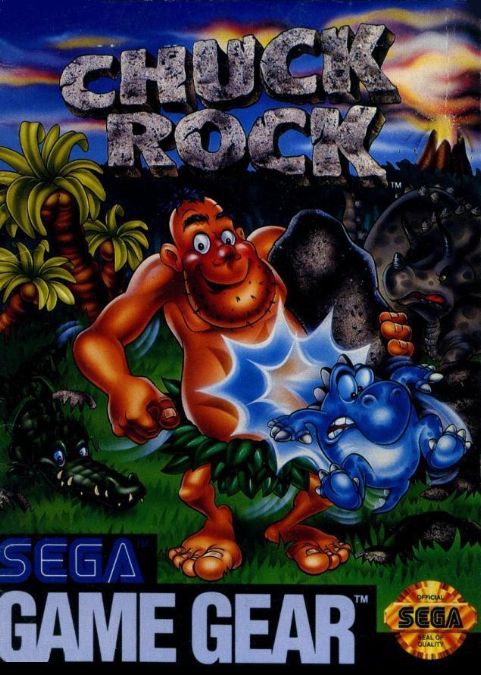
Chuck Rock
Series:
Chuck Rock
Series Order:
1
Rating:
K-A
Genre:
Action
Adventure
Side Scrolling
Show More
Release Date:
1969-12-31
Date Added:
2018-07-03 12:43:42
Game Summary:
Chuck Rock is a 1991 platform video game developed and published by Core Design for the Atari ST and Amiga computers. A Commodore 64 port followed in 1992 and an Amiga CD32 version in 1994. The game was subsequently published by Krisalis Software for the Acorn Archimedes. Virgin Interactive published the game for the Mega Drive/Genesis, Master System, and the Game Gear. Sony Imagesoft published the game for the Mega-CD, Super NES, and Game Boy.
The character of Chuck Rock was an early mascot for Core Design before the introduction of Lara Croft in the 1996 game Tomb Raider, and Chuck Rock and his family even featured in some UK comic books of the 1990s. Chuck Rock was followed by the sequel Chuck Rock II: Son of Chuck in 1993 and the spin-off BC Racers in 1994.
Plot:
The setting of the game is a fictional prehistorical Stone Age-era world that is shared by both neanderthals, woolly mammoth, saber-tooth tigers, dinosaurs, and various assorted wild primeval monsters such as prehistoric mammals, giant insects, human-eating plants, and other exotica; thus, the setting is similar to that of films such as One Million Years B.C., or television shows such as The Flintstones or Dinosaurs.
The eponymous Chuck Rock is an overweight, square-jawed caveman characterized by loutish and lewd behaviour perhaps influenced by the lad culture of the 1990s. Chuck has a limited vocabulary (his favourite phrase being ”Unga Bunga” and not much else), has a balding head cut into a punk-style mohawk, eats whole dinosaur-steaks raw in one bite, and has a penchant for picking up rocks and throwing them at things, hence his name. Chuck is a guitarist and singer (or shouter) in a rock band along with some other cavemen, his attractive wife Ophelia Rock, and a long-haired dinosaur bass player; and whilst on stage he wears a long wig to hide his balding head.
One day, Ophelia Rock is kidnapped by jealous local bully Garry Gritter (a pun on the name of pop star Gary Glitter) and carried off to Gritter’s hang-out in the creepy dinosaur graveyard. Chuck must go to her rescue, searching for her in primeval jungles, swamps, lakes, an ice-capped mountain top, caves, and even the insides of a gigantic dinosaur.
Gameplay:
Chuck Rock is a side-scrolling action-adventure puzzle platformer where the player, as the eponymous caveman, rescues his love interest, Ophelia, who is held hostage in a jungle by Gary Gritter. While Chuck watches TV, Gritter knocks her unconscious while she does laundry, carrying her away. The game has five worlds (Jungle, Cave, Water, Ice and Graveyard) each with three to five levels and a concluding boss battle, and provides the player three lives and one continue. Parallax scrolling is present in all versions except the Atari ST. The enemies include dinosaurs (such as small ones that pop out of eggs) and spiders, and Chuck attacks them by thrusting his beer belly, kicking while above ground, and chucking rocks and boulders.
Additionally, rocks can shield Chuck from hazards that fall from the top, and boulders can be used as platforms, which is occasionally necessary to obtain certain bonus items. Some animals aid in Chuck’s journey, such as flying lizards that he eats, a brontosaurus that he rides, and a crocodile that serves as a seesaw for him to bounce over a wall.
Legacy:
A direct sequel came in 1993 in the form of Chuck Rock II: Son of Chuck, which was also ported to several consoles like its predecessor. Chuck Rock II: Son of Chuck was more aimed at a younger audience than its predecessor, and the player character was not actually Chuck Rock himself but his infant son, Chuck Junior. It was not as well received by fans. Nonetheless around the time of the game’s release, Core commissioned a comic strip in the long-running UK children’s magazine LookIn, centering on the day-to-day lives of Chuck, Ophelia and Junior. As a meta-referential joke, Chuck Jr owned a ”SteggaDrive” console, a reference to the Mega Drive name. A year later, the magazine was closed (after almost 25 years), and the final strip saw Chuck being swept away from his boat, presumed dead but washing up on a tribal island and being revered as a God – as an inexplicable comic touch, mourners at his ”funeral” included then-Prime-Minister John Major.
A spin-off to Chuck Rock came in the game BC Racers, released later in the same year as Chuck Rock II: Son of Chuck. BC Racers was released on the Mega-CD, Sega 32X and 3DO, and the format was changed from that of a platformer to that of a racing game. The game was designed by Toby Gard, who later created Lara Croft. BC Racers retained the characters of Chuck Rock as well as his son Chuck Junior. Other prehistoric racers include Millstone Rockafella, Brick Jagger and Jimi Handtrix. The game was generally well received among the fans of the consoles in question, and BC Racers was named the Best Sega CD Driving/Racing Game of the Year in GameFan’s 1994 ”Megawards” (Vol 3, Iss. 1). BC Racers was released as freeware two years later for the PC.
Core promised an updated version of Chuck Rock for a next-generation console, but it never materialized.
The character of Chuck Rock was an early mascot for Core Design before the introduction of Lara Croft in the 1996 game Tomb Raider, and Chuck Rock and his family even featured in some UK comic books of the 1990s. Chuck Rock was followed by the sequel Chuck Rock II: Son of Chuck in 1993 and the spin-off BC Racers in 1994.
Plot:
The setting of the game is a fictional prehistorical Stone Age-era world that is shared by both neanderthals, woolly mammoth, saber-tooth tigers, dinosaurs, and various assorted wild primeval monsters such as prehistoric mammals, giant insects, human-eating plants, and other exotica; thus, the setting is similar to that of films such as One Million Years B.C., or television shows such as The Flintstones or Dinosaurs.
The eponymous Chuck Rock is an overweight, square-jawed caveman characterized by loutish and lewd behaviour perhaps influenced by the lad culture of the 1990s. Chuck has a limited vocabulary (his favourite phrase being ”Unga Bunga” and not much else), has a balding head cut into a punk-style mohawk, eats whole dinosaur-steaks raw in one bite, and has a penchant for picking up rocks and throwing them at things, hence his name. Chuck is a guitarist and singer (or shouter) in a rock band along with some other cavemen, his attractive wife Ophelia Rock, and a long-haired dinosaur bass player; and whilst on stage he wears a long wig to hide his balding head.
One day, Ophelia Rock is kidnapped by jealous local bully Garry Gritter (a pun on the name of pop star Gary Glitter) and carried off to Gritter’s hang-out in the creepy dinosaur graveyard. Chuck must go to her rescue, searching for her in primeval jungles, swamps, lakes, an ice-capped mountain top, caves, and even the insides of a gigantic dinosaur.
Gameplay:
Chuck Rock is a side-scrolling action-adventure puzzle platformer where the player, as the eponymous caveman, rescues his love interest, Ophelia, who is held hostage in a jungle by Gary Gritter. While Chuck watches TV, Gritter knocks her unconscious while she does laundry, carrying her away. The game has five worlds (Jungle, Cave, Water, Ice and Graveyard) each with three to five levels and a concluding boss battle, and provides the player three lives and one continue. Parallax scrolling is present in all versions except the Atari ST. The enemies include dinosaurs (such as small ones that pop out of eggs) and spiders, and Chuck attacks them by thrusting his beer belly, kicking while above ground, and chucking rocks and boulders.
Additionally, rocks can shield Chuck from hazards that fall from the top, and boulders can be used as platforms, which is occasionally necessary to obtain certain bonus items. Some animals aid in Chuck’s journey, such as flying lizards that he eats, a brontosaurus that he rides, and a crocodile that serves as a seesaw for him to bounce over a wall.
Legacy:
A direct sequel came in 1993 in the form of Chuck Rock II: Son of Chuck, which was also ported to several consoles like its predecessor. Chuck Rock II: Son of Chuck was more aimed at a younger audience than its predecessor, and the player character was not actually Chuck Rock himself but his infant son, Chuck Junior. It was not as well received by fans. Nonetheless around the time of the game’s release, Core commissioned a comic strip in the long-running UK children’s magazine LookIn, centering on the day-to-day lives of Chuck, Ophelia and Junior. As a meta-referential joke, Chuck Jr owned a ”SteggaDrive” console, a reference to the Mega Drive name. A year later, the magazine was closed (after almost 25 years), and the final strip saw Chuck being swept away from his boat, presumed dead but washing up on a tribal island and being revered as a God – as an inexplicable comic touch, mourners at his ”funeral” included then-Prime-Minister John Major.
A spin-off to Chuck Rock came in the game BC Racers, released later in the same year as Chuck Rock II: Son of Chuck. BC Racers was released on the Mega-CD, Sega 32X and 3DO, and the format was changed from that of a platformer to that of a racing game. The game was designed by Toby Gard, who later created Lara Croft. BC Racers retained the characters of Chuck Rock as well as his son Chuck Junior. Other prehistoric racers include Millstone Rockafella, Brick Jagger and Jimi Handtrix. The game was generally well received among the fans of the consoles in question, and BC Racers was named the Best Sega CD Driving/Racing Game of the Year in GameFan’s 1994 ”Megawards” (Vol 3, Iss. 1). BC Racers was released as freeware two years later for the PC.
Core promised an updated version of Chuck Rock for a next-generation console, but it never materialized.
Platform:
Sega Game Gear
Publisher:
Sega
Developers:
Core Design
Show More
Players:
1
Country of Purchase:
United States
Graphics:
8-bit
Input Devices:
Handheld Console
Show More
Media Type:
Cartridge
Game Modes:
Single Player
Show More
Packaging:
Cardboard Box
Automatic Estimated Value:
~$13.06
Automatic Estimated Date:
2025-10-31
Date Added:
2018-07-03 12:43:42