Title:
Kings Quest IV-V-VI
Genre:
Adventure
Fantasy
Show More
Release Date:
1969-12-31
Date Added:
2018-07-03 13:50:29
Game Summary:
King’s Quest IV: The Perils of Rosella, released in 1988, was the first major graphical computer adventure game with a female protagonist.[citation needed] The player takes on the role of Princess Rosella, daughter of King Graham of Daventry (KQI and KQII) and the twin sister of Gwydion/Alexander (KQIII). KQIV was also one of the first PC games to support a sound card.
This is the only chapter in the King’s Quest series where the action takes place in real-time. The events of the game cover about 24 hours. Some activities must be completed during the day, while other puzzles can be solved only at night.
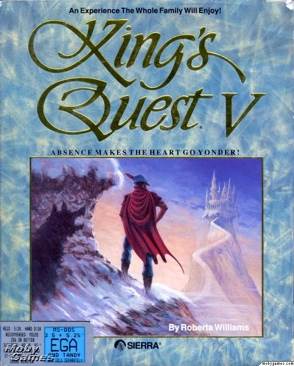
King’s Quest V: Absence Makes the Heart Go Yonder! is a 1990 adventure game released by Sierra. Released in November 1990, it featured a significant improvement in graphics (achieved through the introduction of VGA into the series). It was also the first King’s Quest installment to replace the typing user interface with a point-and-click user interface. It was also the last King’s Quest to have a stand alone EGA release at 320x200, dual VGA/EGA versions of the game turned the 256 colour graphics into 16 colour at 640x400 resolution.
King’s Quest V won Computer Gaming World’s 1991 Adventure Game of the Year award. It was later released as a "talkie” CD-ROM, meaning the characters have voices, done by members of the Sierra staff. The music was MIDI based and written by Mark Seibert and Ken Allen.
Connections to other King’s Quest games
Whereas most of the other games in the series tend to build on the basic story elements of the previous games, with new characters that are introduced in one game becoming important in later games, King’s Quest V is one of the few where the plot itself is directly connected to events in both previous and future games. The location the game is set, Serenia, was first visited in the earlier game, Wizard and the Princess. The transformation of Manannan into a cat is a necessary task to completing King’s Quest III. And this act has profound consequences for Alexander (and his family), as it is the impetus for the KQV storyline. Also, KQV’s ending ties into its sequel, King’s Quest VI. Cassima was introduced as a slave to the wizard Mordack. Before she is sent home at the end, Alexander mentions wanting to visit her in the Land of the Green Isles, which happens at the beginning of KQVI. And Cassima mentions her Vizier, who first introduced Mordack to her. In KQVI, we find out that Mordack and the Vizier (who is the primary antagonist of KQVI) are both part of an organization known as the Society of the Black Cloak. Even the music for Cassima in Mordack’s castle is enhanced and used for the love theme for Alexander and Cassima. In the end of that game the Vizier is defeated by Alexander and Cassima and the two marry.
King’s Quest VI: Heir Today, Gone Tomorrow is the sixth installment in the King’s Quest series of adventure games produced by Sierra Entertainment. Written by Roberta Williams and Jane Jensen, KQVI is widely recognized as the high point in the series for its in-depth plot, landmark 3D graphic introduction movie (created by Kronos Digital Entertainment), and professional voice acting (Hollywood actor Robby Benson provided the voice for Prince Alexander, the game’s protagonist). KQVI was programmed in Sierra’s Creative Interpreter and was the last King’s Quest game to be released on floppy disk. A CD-ROM version of the game was released in 1993, including more character voices, a slightly different opening movie and more detailed artwork and animation.
The name of this sequel is a pun on the common phrase "here today, gone tomorrow”. This pun is related to the sudden disappearance of Prince Alexander, who is the heir of King Graham. King’s Quest III: To Heir Is Human also contained the word "heir” in its title and also featured Prince Alexander (then known as the slave Gwydion) as the main character.
This is the only chapter in the King’s Quest series where the action takes place in real-time. The events of the game cover about 24 hours. Some activities must be completed during the day, while other puzzles can be solved only at night.
King’s Quest V: Absence Makes the Heart Go Yonder! is a 1990 adventure game released by Sierra. Released in November 1990, it featured a significant improvement in graphics (achieved through the introduction of VGA into the series). It was also the first King’s Quest installment to replace the typing user interface with a point-and-click user interface. It was also the last King’s Quest to have a stand alone EGA release at 320x200, dual VGA/EGA versions of the game turned the 256 colour graphics into 16 colour at 640x400 resolution.
King’s Quest V won Computer Gaming World’s 1991 Adventure Game of the Year award. It was later released as a "talkie” CD-ROM, meaning the characters have voices, done by members of the Sierra staff. The music was MIDI based and written by Mark Seibert and Ken Allen.
Connections to other King’s Quest games
Whereas most of the other games in the series tend to build on the basic story elements of the previous games, with new characters that are introduced in one game becoming important in later games, King’s Quest V is one of the few where the plot itself is directly connected to events in both previous and future games. The location the game is set, Serenia, was first visited in the earlier game, Wizard and the Princess. The transformation of Manannan into a cat is a necessary task to completing King’s Quest III. And this act has profound consequences for Alexander (and his family), as it is the impetus for the KQV storyline. Also, KQV’s ending ties into its sequel, King’s Quest VI. Cassima was introduced as a slave to the wizard Mordack. Before she is sent home at the end, Alexander mentions wanting to visit her in the Land of the Green Isles, which happens at the beginning of KQVI. And Cassima mentions her Vizier, who first introduced Mordack to her. In KQVI, we find out that Mordack and the Vizier (who is the primary antagonist of KQVI) are both part of an organization known as the Society of the Black Cloak. Even the music for Cassima in Mordack’s castle is enhanced and used for the love theme for Alexander and Cassima. In the end of that game the Vizier is defeated by Alexander and Cassima and the two marry.
King’s Quest VI: Heir Today, Gone Tomorrow is the sixth installment in the King’s Quest series of adventure games produced by Sierra Entertainment. Written by Roberta Williams and Jane Jensen, KQVI is widely recognized as the high point in the series for its in-depth plot, landmark 3D graphic introduction movie (created by Kronos Digital Entertainment), and professional voice acting (Hollywood actor Robby Benson provided the voice for Prince Alexander, the game’s protagonist). KQVI was programmed in Sierra’s Creative Interpreter and was the last King’s Quest game to be released on floppy disk. A CD-ROM version of the game was released in 1993, including more character voices, a slightly different opening movie and more detailed artwork and animation.
The name of this sequel is a pun on the common phrase "here today, gone tomorrow”. This pun is related to the sudden disappearance of Prince Alexander, who is the heir of King Graham. King’s Quest III: To Heir Is Human also contained the word "heir” in its title and also featured Prince Alexander (then known as the slave Gwydion) as the main character.
Platform:
PC
Developers:
Show More
Input Devices:
Show More
Media Type:
Download
Date Added:
2018-07-03 13:50:29