
The trading card market exploded over the past few years. Pokemon cards that sold for $5 in 2019 are now worth $500. Magic: The Gathering reserved list cards keep climbing. Even sports cards are back in a big way.
Problem is, once you’ve got more than a couple hundred cards, keeping track of what you own (and what it’s all worth) becomes a real headache. Shoeboxes and binders don’t tell you that your 1st Edition Charizard just doubled in value.
Here are the best apps for tracking your trading card collection in 2026 — from casual collectors to serious investors.
Who This Guide Is For
There are two very different types of card collectors, and they need different tools:
The Collector: You buy packs, build sets, keep cards in binders, and enjoy the hobby. You want to know what you have and maybe track your collection’s total value. You probably also collect other things besides cards.
The Investor/Trader: You buy and sell for profit. You need real-time pricing, market trends, and portfolio analytics. Cards are an asset class to you.
The apps below serve different points on that spectrum. We’ll be clear about which is which.
The Apps
1. iCollect Everything — Best for Collectors Who Collect More Than Just Cards
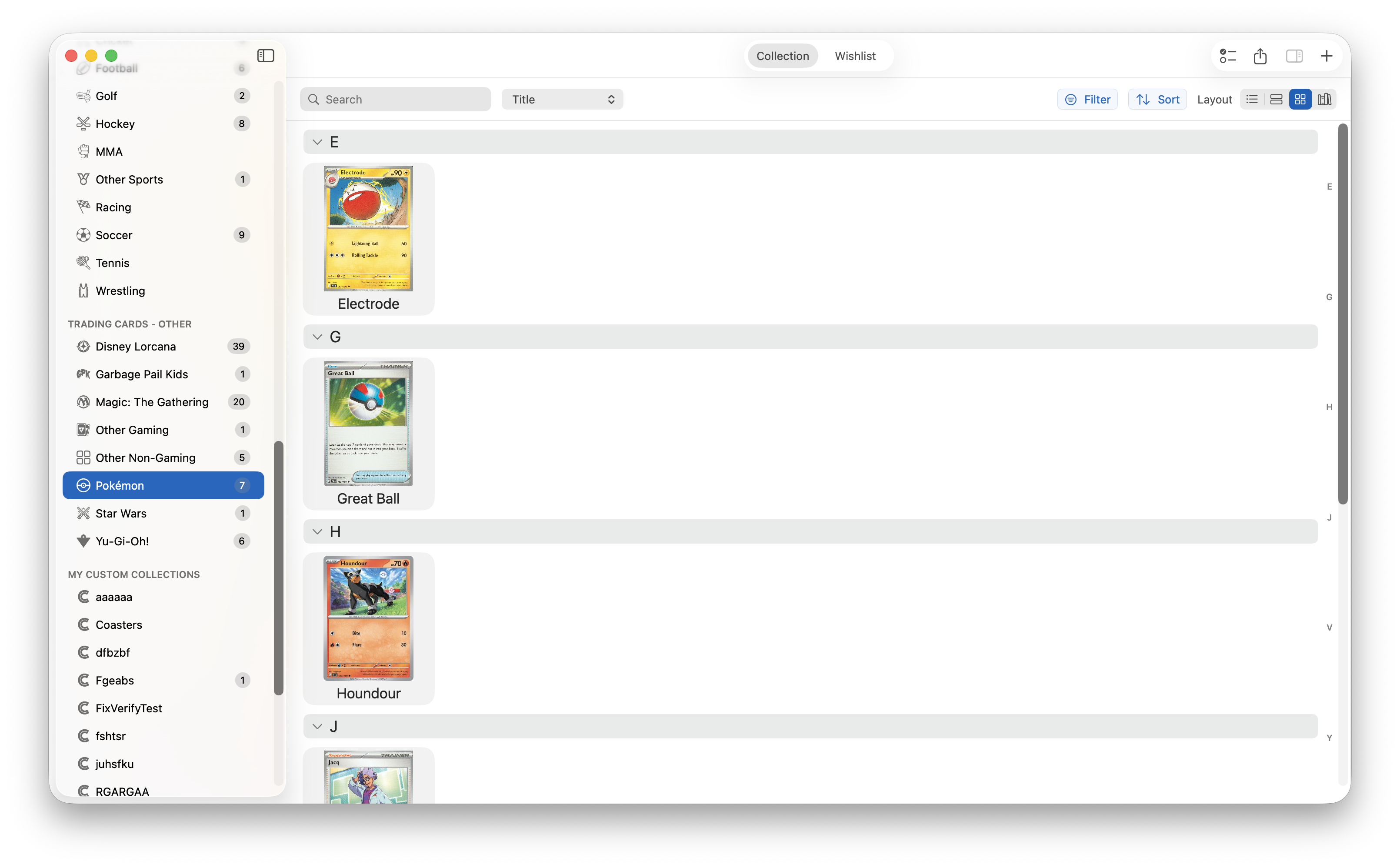
iCollect Everything added full trading card support in 2025, covering Pokemon, Magic: The Gathering, Yu-Gi-Oh!, sports cards, and more. You can scan card barcodes (for sealed products) or search the built-in database to add singles.
What makes it different: If you collect cards and other things — movies, action figures, video games, whatever — this is the only app where everything lives together. One app, one subscription, one synced collection across all your devices.
Best for: Collectors who want one app for their entire collection. Casual to moderate card collectors who don’t need minute-by-minute pricing.
Price: Free to start. Pro unlocks unlimited items and sync.


2. Collectr — Best for Serious TCG Investors
Collectr is built for people who treat trading cards as an investment portfolio. Real-time market valuations, trend analysis, and portfolio performance charts. It supports 25+ TCGs including Pokemon, Magic, Yu-Gi-Oh!, One Piece, and Digimon.
Best for: Card traders and investors who want financial-grade portfolio tracking.
Not ideal for: Casual collectors who just want to catalog what’s in their binders. The investment-focused interface is overkill if you’re not tracking buy/sell prices.
Price: Free tier available. Pro features for a subscription fee.
3. TCGplayer — Best Marketplace with Built-in Collection Tracking
TCGplayer started as (and still primarily is) a marketplace for buying and selling cards. But it includes a collection tracking feature that lets you catalog your cards and see their market value based on TCGplayer’s own sales data.
Best for: Collectors who actively buy and sell on TCGplayer. The collection tracker ties directly into their marketplace.
Limitation: It’s a marketplace first, collection tool second. The tracking features aren’t as polished as dedicated apps. And if you collect things besides cards, you’re out of luck.
Price: Free.
4. Moxfield / Archidekt — Best for Magic: The Gathering Deck Building
If you play competitive Magic, you probably already know Moxfield or Archidekt. They’re primarily deck builders — you construct and test decks, share them with friends, and track your collection of MTG cards. Moxfield’s collection tracker in particular has gotten really good.
Best for: MTG players who want deck building + collection tracking in one place.
Limitation: Magic only. No Pokemon, no Yu-Gi-Oh!, no sports cards.
5. CLZ Games — Limited Card Support
CLZ doesn’t have a dedicated trading card app. Their CLZ Games app covers video games, not card games. Some collectors try to shoehorn cards into CLZ’s system, but it wasn’t designed for it.
Comparison: Card App Features