
There are two kinds of comic collectors. People who bag and board everything, organize by publisher and title, and keep a spreadsheet of key issues. And people who have six long boxes in a closet with zero idea what is in any of them.
This guide is for the second group. (The first group already has a system. They just need a better app.)
Step 1: Sort Before You Catalog
Before you open any app or start scanning, do a rough sort. Pull everything out and make piles:
- Marvel
- DC
- Independent (Image, Dark Horse, IDW, Boom, etc)
- Unknown/unsorted
Within each pile, sort alphabetically by title. Don’t worry about issue numbers yet. Just get Amazing Spider-Man next to Amazing Spider-Man and Batman next to Batman.
This step takes 30-60 minutes for a typical collection of 200-500 comics. It makes everything after this much faster.
Step 2: Bag and Board
If your comics are not already in bags with boards, fix that before cataloging. Unprotected comics lose value every day from handling, light exposure, and humidity.
Standard bags and boards cost about $0.10-$0.15 per comic in bulk. A box of 100 bags and 100 boards runs $15-$20 on Amazon or at your local comic shop. It is the cheapest insurance policy in collecting.
Match bag size to comic era:
- Current size: Comics from 1990 to present
- Silver/Bronze age size: Comics from 1960-1990 (slightly wider)
- Golden age size: Pre-1960 (wider still)
Step 3: Catalog Your Comics
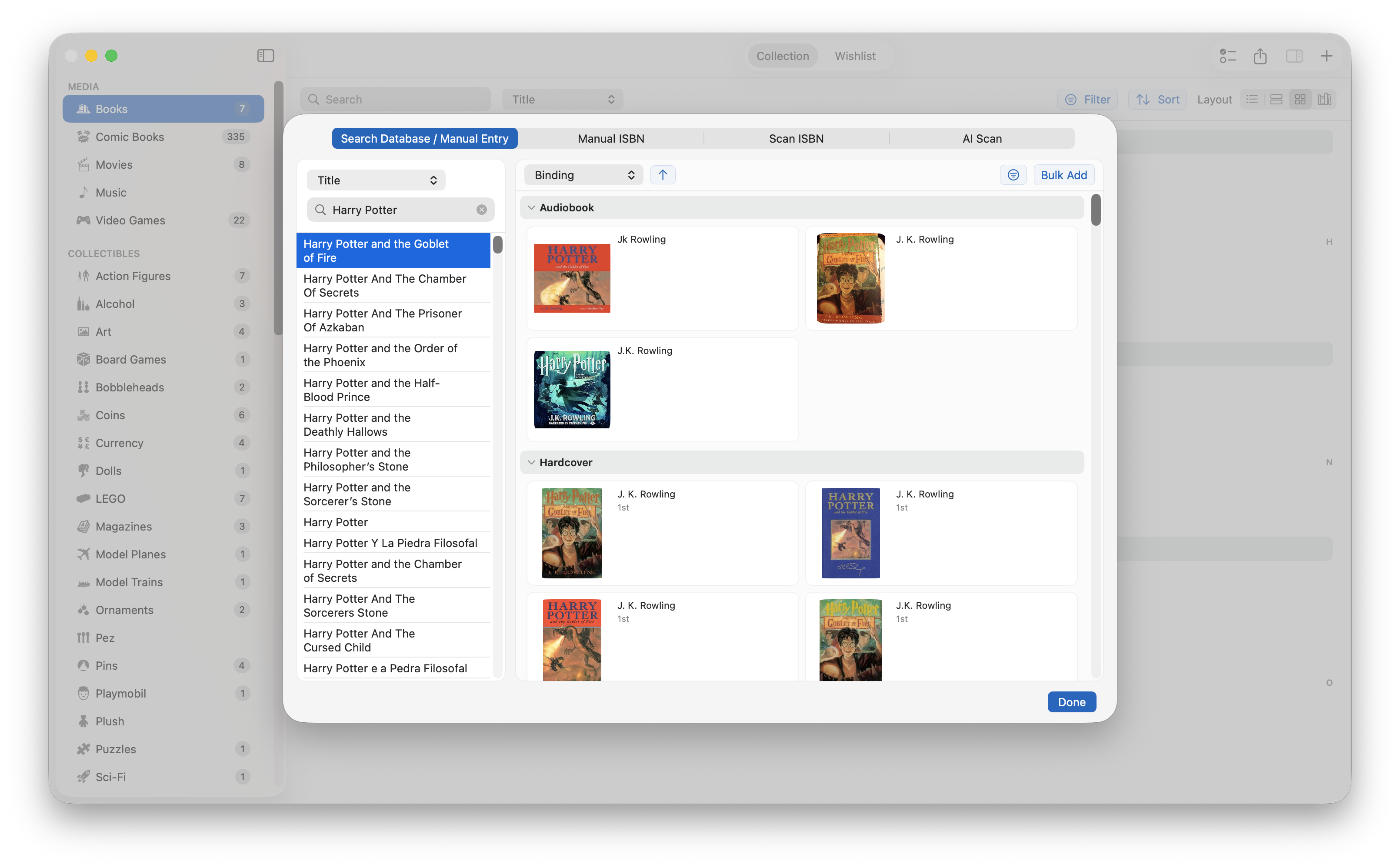
This is where the app comes in. Download iCollect Everything on your phone and start scanning barcodes. Modern comics (roughly 1980s onward) have UPC barcodes on the cover. Scan the barcode, and the app pulls the title, issue number, publisher, cover art, and details.
For older comics without barcodes, search by title and issue number in the app’s database.
Tips for efficient cataloging:
- Work through one title at a time, in issue order. Scan #1, then #2, then #3. This catches gaps in your runs immediately.
- Note the condition of each issue as you go. NM (Near Mint), VF (Very Fine), FN (Fine), etc. Don’t overthink it. Use your best judgment.
- Use the wishlist for issues you need to complete a run.
- Take a photo of any variant covers. The barcode might map to the standard cover, but your photo shows which version you actually own.
 |
 |
Step 4: Know What’s Valuable
Not all comics are created equal. Here is what to look for:
Key issues: First appearances, deaths, costume changes, and origin stories. The first appearance of a character in any medium is almost always the most valuable issue. (Amazing Fantasy #15 = first Spider-Man. Incredible Hulk #181 = first Wolverine.)
Low print runs: Independent comics from the 1970s-1990s often had much smaller print runs than Marvel or DC. A first printing of Teenage Mutant Ninja Turtles #1 (1984, Mirage Studios) is worth $30,000+ because only 3,000 copies were printed.
CGC graded copies: Professionally graded comics in CGC or CBCS slabs sell for a premium over raw copies, especially for key issues. A CGC 9.8 of a key modern comic can be worth 5-10x the raw value.
Frequently Asked Questions
What is the best app to catalog comic books?
iCollect Everything catalogs comics with barcode scanning, cover art, issue tracking, and estimated values. It also handles your other collectibles (movies, action figures, trading cards) in the same app. Free on iPhone, Android, Mac, and Windows.
How do I know if my comic books are worth money?
Check for key issues (first appearances, origin stories), low print runs, and condition. Scan your comics with iCollect Everything to see estimated values. For potentially high-value issues, check eBay sold listings and consider professional CGC grading.
Should I get my comics graded?
Only for comics you believe are worth $100+ in raw condition. CGC grading costs $25-$65 per comic at standard turnaround. A high grade (9.6 or above) on a key issue can multiply the value significantly. For common comics, grading costs more than the comic is worth.
