
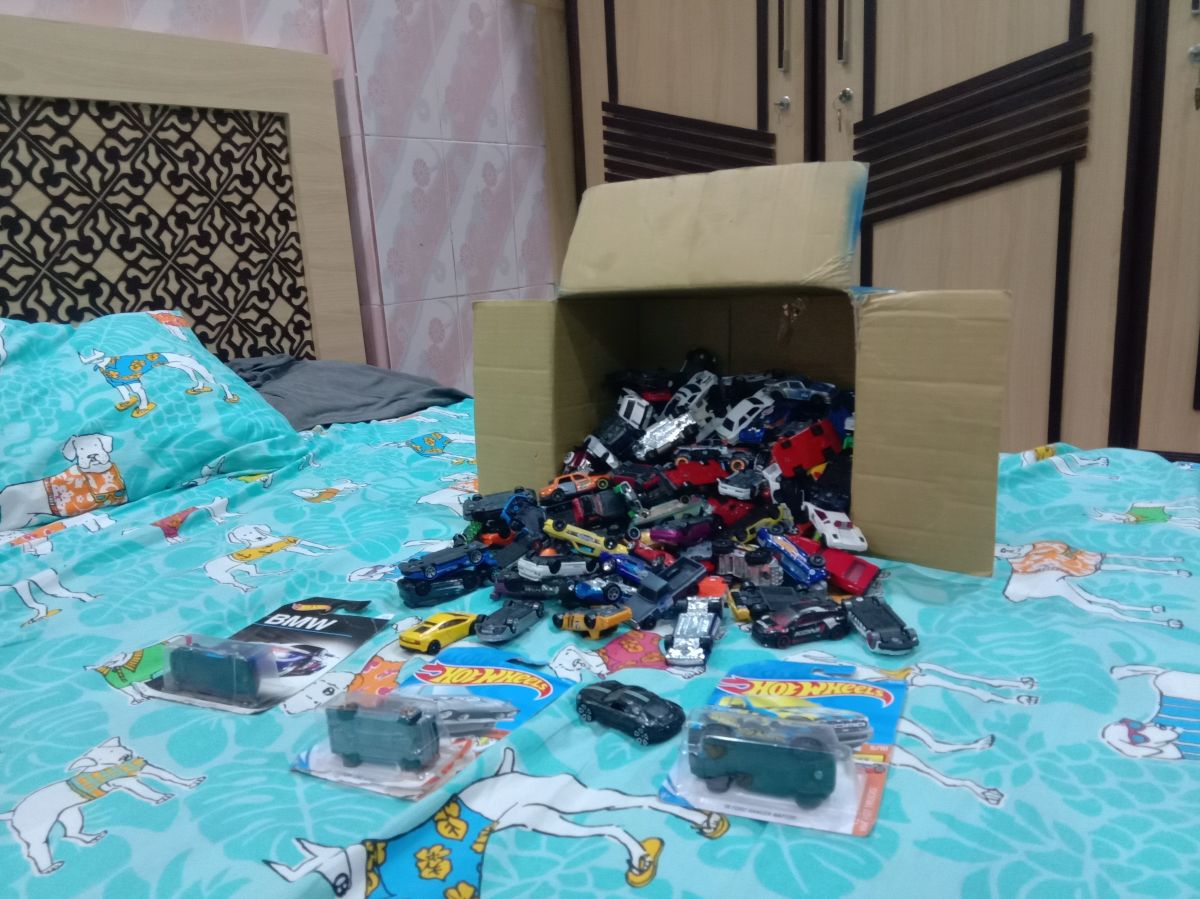
That bin of Hot Wheels in your closet? The ones you’ve been collecting since you were twelve, or since last Tuesday? Some of them might be worth real money. Not “oh cool, $20” money. We’re talking $1,000, $10,000, or in a few extreme cases, six figures.
Here are the Hot Wheels cars collectors are paying the most for right now, plus a field guide to figuring out whether anything in your own bin belongs on this list. Want to check your cars as you read? Our Hot Wheels value scanner walkthrough shows you how to identify and price cars right from your phone.
How Hot Wheels Values Break Down in 2026
Before the list, a quick map. Hot Wheels values cluster into three tiers, and knowing which tier you’re digging in saves a lot of confusion:
- The grails ($25,000 to $175,000): Prototypes, factory mistakes, and the rarest 1968-1972 color variants. You will probably never hold one. People still do find them.
- Collector redlines ($500 to $5,000): Vintage 1968-1977 cars that genuinely turn up in inherited collections and garage-sale boxes. This is the tier worth learning cold.
- Attainable modern cars ($50 to $500): Super Treasure Hunts, Red Line Club exclusives, first-year Treasure Hunts, and error cars. These are still being made, which means you can still catch one at retail for $1.29.
The All-Time Grails
These are the cars that make grown adults shake when they find them at estate sales.
1. 1969 Pink Rear-Loading Beach Bomb – $125,000 to $175,000
The holy grail. Period. Mattel designed the original Beach Bomb (a VW Microbus) with surfboards sticking out the back window. Problem was, the boards made it too top-heavy for the Supercharger track sets. Mattel redesigned it with side-loading surfboard panels, but a handful of the rear-loading prototypes escaped the factory. The pink version is the rarest, with fewer than a dozen known to exist. One has reportedly sold for as much as $175,000.
If you find one at a garage sale for a quarter, you’ve won the lottery. Literally.
2. Diamond-Encrusted 40th Anniversary Car – $140,000
In 2008, Mattel partnered with a jeweler to create a Hot Wheels car set with over 2,700 diamonds, rubies, and sapphires. It was a one-off promotional piece valued at $140,000. You won’t find this one in a peg hook at Walmart.
3. 1968 Chevrolet Camaro (White Enamel Prototype) – $100,000
One of the original 1968 “Sweet Sixteen” cars that launched Hot Wheels, but in an unreleased white enamel finish. Prototypes like this were never meant to reach the public, which is exactly why collectors reportedly pay six figures for them.
4. 1968 Ford Mustang (Strawberry Over Chrome) – $50,000
Another original 1968 Redline. The “strawberry” pink Spectraflame finish over chrome is incredibly rare. Most survivors are beat up from decades of play, so a mint-condition example commands serious money.
5. 1968 Chevrolet Camaro (Lime Green Over Chrome) – $25,000
Same era, different color. The lime green Spectraflame Camaro from the original 1968 lineup is one of the most sought-after Redlines. Condition matters enormously here. A loose, played-with example might be $500, while a mint unplayed one can reach $25,000.
Vintage Cars Worth $5,000 to $15,000
6. 1970 Mighty Maverick (Mad Maverick Base Error) – $15,000
Mattel accidentally used the base plate from the “Mad Maverick” casting on some Mighty Maverick bodies. This manufacturing error created one of the most valuable Hot Wheels variations. The lesson: check your base plates.
7. 1969 Dodge Charger (Spectraflame Colors) – $13,000
The original 1969 Charger in Spectraflame blue or purple. These were part of the first wave of Hot Wheels, and any surviving example in good condition is worth thousands.
8. 1971 Olds 442 (Spectraflame Purple) – $12,000
Produced for only one year. The purple Spectraflame version is the one collectors hunt for, and even rough examples get bid up because so few survived.
9. 1968 Python (Cheetah Base) – $10,000
Early production runs of the Python used a base plate stamped “Cheetah” (the car’s original name before Mattel changed it). If you see “Cheetah” on the bottom, that’s a $10,000 car.
10. 1974 Rodger Dodger (Blue, White Interior) – $8,000
The blue Rodger Dodger with a white interior is the most valuable version of this casting. Most Rodger Dodgers are worth $20-$50, but this specific combo is worth 100x that.
Collector Redlines Worth $500 to $5,000
This is the tier where ordinary people actually find valuable cars. Every entry below has surfaced in childhood collections and coffee cans of loose cars, and none of them look obviously special until you know what to check.
11. 1970 Ed Shaver Custom AMX – commonly $3,000-$6,000
A blue Custom AMX given away as a UK promotion for drag racer Ed Shaver. Here’s the catch: the car itself is identical to the standard blue AMX. The value lives in the “Ed Shaver” sponsor decals (and the original blister card, if you’re extremely lucky). Without the stickers it’s a nice $150 redline. With them, it’s a mortgage payment.
12. 1971 Bye-Focal (Spectraflame Purple) – commonly $800-$2,500
A show rod with a clear hood over twin exposed engines. Purple is the color collectors chase, and straight examples are getting scarce because the clear plastic tends to warp and crack with age. A glossy, unwarped purple Bye-Focal is a four-figure car.
13. 1972 Open Fire – commonly $700-$2,000
A six-wheeled AMC Gremlin, made for just one year at the tail end of the Spectraflame era. Low production plus a strange, lovable casting equals steady four-figure sales in collector condition.
14. 1970 Red Baron (White Interior) – commonly $1,000-$2,500
The Red Baron is one of the most common redlines ever made, usually a $30-$75 car. But a small early run shipped with a white interior instead of black. Flip yours over and look through the window. That one detail is the difference between lunch money and a car payment.
15. 1973 Superfine Turbine – commonly $400-$1,200
1973 was Hot Wheels’ worst sales year, which makes it the best year for scarcity. Production was tiny, Spectraflame was gone, and most kids skipped the line entirely. Almost any 1973-only enamel car deserves a lookup, and the Superfine Turbine is the poster child.
16. 1968 Custom Camaro (Standard Colors) – commonly $200-$1,500
The regular production versions of the very first Hot Wheels car ever sold. Common Spectraflame colors like blue and gold sit at the low end; scarcer colors and near-mint examples climb fast. If a Camaro turns up in grandpa’s toolbox, look it up before you do anything else to it.
One rule that applies across this whole tier: pink multiplies everything. Spectraflame pink and magenta were marketed as “girls’ colors” in an era when nearly all buyers were boys, so they sold poorly and survive in tiny numbers. A pink version of almost any 1968-1972 casting is worth several times the common colors.
Modern Cars Already Climbing in Value
You don’t need a time machine. Some recent releases are already worth multiples of their $1.29 retail price:
- Super Treasure Hunts (any year): Identifiable by Spectraflame paint, Real Riders rubber wheels, and a “TH” marking. These ship randomly in cases alongside regular cars. A Super from 2024-2026 can sell for $30-$100 within weeks of release, and the most popular castings hold $150+.
- ’95 Mazda RX-7 (2025 STH): One of the strongest performing Supers of 2025. Early sales were 10x+ retail, and it has held its value better than most of that year’s lineup.
- RLC (Red Line Club) exclusives: Member-only releases that sell out in seconds and immediately hit $50-$200 on the secondary market.
- 1995 Treasure Hunt series: The first Treasure Hunt year, limited to a reported 10,000 of each car. Carded examples commonly bring $40-$150, and the ’67 Camaro from that series can reach $300-$500.
- Error cars: Wrong wheels, wrong tampos, missing paint apps, cars in the wrong package. The VW ID.Buzz with mis-tamped logos was selling for 40x retail in late 2025.
How to Check if Your Hot Wheels Are Worth Money
Price guides are guesses. What somebody actually paid last week is data. Here’s the workflow collectors use:
- Search precisely. “1968 Custom Camaro redline blue” beats “old hot wheels.” Include the year, casting name, color, and “redline” or “STH” where relevant.
- Filter to Sold Items. On eBay, tick the “Sold Items” box in the search filters. Asking prices mean nothing; there are $500 listings for $20 cars that have sat unsold for years.
- Read the last 5-10 sales. Throw out the single highest and lowest. The cluster in the middle is your real market value.
- Match condition and packaging. A carded sale doesn’t price a loose car, and a mint car doesn’t price your chipped one. Compare like with like.
- Log it. Open iCollect Everything, scan the barcode (if carded) or search by casting name for loose cars, and save your estimate so your collection total stays current.
 |
 |
Is Yours One of These? The Five-Minute Identification Check
A list of prices is useless until you can connect it to the actual cars in your hand. Here’s how to read a Hot Wheels car like a collector, no experience required.
Start With the Base
Flip the car over. The base plate is its birth certificate:
- Casting name: The model’s name is cast right into the base, and that name (not what the car resembles) is what you search. It’s also where the famous money errors hide: a Python base stamped “Cheetah” or a Mighty Maverick wearing a “Mad Maverick” base are exactly the mismatches that turn a $50 car into a five-figure one.
- Country of origin: “U.S.A.” or “Hong Kong” means the vintage era. Malaysia, Thailand, Indonesia, Vietnam, or China means modern production. A Hong Kong base is your first hint that a car deserves a much closer look.
- The year: The date on the base is the copyright year of the tooling, not the year your car was made. A base that says 1968 can sit under a car produced years later. Use it to identify the casting, not to date the car.
- Metal vs. plastic: Vintage redlines have metal bases. Most modern mainline cars ride on plastic; modern premium lines (RLC, Car Culture) return to metal bases and are worth more accordingly.
Redline-Era Tells (1968-1977)
- The red stripe: The era is named for the thin red line on the tire sidewall. If your wheels have it, and they’re original rather than reproductions, you’re holding a vintage car.
- Spectraflame paint: A translucent candy lacquer sprayed over polished metal, so the shine comes from underneath. It looks lit from within in a way ordinary enamel never does. Spectraflame ran from 1968 to 1972; plain enamel took over in 1973.
- Toning: Spectraflame darkens and dulls with age. A toned car is worth less than a bright one, but a toned example of a rare variant is still very much worth money.
- The suspension test: Redlines ride on a torsion-bar suspension; press down gently and the car springs back. It’s a quick authenticity check when the wheels look right but something feels off.
The Super Treasure Hunt Triple-Check
Modern Supers hide in plain sight next to $1.29 cars, and plenty of shiny cars get mistaken for them. A real Super has all three of these, not one or two:
- Spectraflame paint. The same candy-over-metal finish as the vintage cars. If the paint is ordinary gloss, it’s not a Super.
- Real Riders. Rubber tires, usually with branding on the sidewall, instead of hard plastic wheels.
- The TH logo. A “TH” flame logo worked into the car’s graphics, plus a gold low-production seal printed on the card behind the car.
A car with only the circle-flame logo but normal paint and plastic wheels is a regular Treasure Hunt, worth about $5-$20. Nice find, different tier.
Condition and Packaging: The Multiplier
Everything above tells you which car you have. Condition tells you which price you get:
- Vintage, played-with: Chips, toning, and bent axles put most redlines at 10-20% of mint value. Still worth checking; 10% of $12,000 is real money.
- Vintage, mint loose: The sweet spot for most finds. That lime green Camaro’s spread of $500 to $25,000 is almost entirely a condition spread.
- Modern, loose: Even Supers lose half or more of their value out of the package.
- Modern, carded: Card condition is car condition. A crushed blister or creased card can cut the price in half, while clean unpunched cards bring a premium.
- Never restore: Repaints, polished bodies, and swapped wheels are worth less than honest wear, and undisclosed restoration is the fastest way to get blacklisted by other collectors.
Hot Wheels Value Cheat Sheet
All figures are estimates based on recent secondary-market sales; individual results vary with condition, color, and timing.
| What you’re holding | Typical value in 2026 |
| Modern mainline (most of your bin) | Under $5 |
| Regular Treasure Hunt (2013-present) | $5-$20 |
| Super Treasure Hunt, carded | $30-$150+ |
| RLC exclusive | $50-$200+ |
| 1995 Treasure Hunt series car | $40-$500 |
| Redline, played-with, common casting | $10-$100 |
| Redline, clean, common casting | $100-$1,000 |
| Redline, rare color or variant | $1,000-$15,000+ |
| Prototype or major base error | $10,000-$175,000 (reportedly) |
Track What You’ve Got
Whether your collection is 50 cars or 5,000, knowing what it’s worth starts with knowing what you have. iCollect Everything lets you scan barcodes, search the Hot Wheels database, track estimated values, and see your total collection value at a glance. Free on iPhone, Android, Mac, Windows, and the web. For a full setup walkthrough, see our guide to tracking a Hot Wheels collection from first scan to insurance-ready inventory.
And while you’re excavating that closet: the shoebox of cartridges sitting next to the Hot Wheels bin has sleeper hits of its own. Here’s how to tell if your old video games are worth money.
Frequently Asked Questions
How do I know if my old Hot Wheels are valuable?
Flip the car over and read the base first: “U.S.A.” or “Hong Kong” plus red-striped wheels means a vintage Redline worth looking up. Then check for Spectraflame paint (translucent candy over polished metal) and any odd base stampings, since mismatched bases like the “Cheetah” Python are among the most valuable errors. Cars from 1968-1972 in good condition are almost always worth checking, and the iCollect Everything app provides estimated values for many Hot Wheels models.
What is the most expensive Hot Wheels car ever sold?
The 1969 pink rear-loading Beach Bomb (VW Microbus) has reportedly sold for up to $175,000, making it the most valuable Hot Wheels car in the world. Fewer than a dozen are known to exist.
Are modern Hot Wheels worth anything?
Super Treasure Hunts, Red Line Club (RLC) exclusives, and error cars from recent years can be worth $30 to $200+. Regular mainline cars rarely appreciate significantly, but Supers and errors can be worth 10-40x retail within weeks of release.
What does the year on the bottom of my Hot Wheels car mean?
It’s the copyright year of the casting’s tooling, not the year your car was made. A car with “1968” on the base could have been produced decades later. To date a car, combine the casting name, country of origin, wheel style, and paint type, or look up the specific release.
What’s the difference between a Treasure Hunt and a Super Treasure Hunt?
A regular Treasure Hunt carries a hidden low-production circle-flame logo but has normal paint and wheels, and usually sells for $5-$20. A Super Treasure Hunt adds Spectraflame paint and rubber Real Riders tires and typically sells for $30-$150+. If it doesn’t have all three tells (the paint, the tires, and the TH logo), it isn’t a Super.
Should I keep my Hot Wheels in the package?
For modern cars, yes, if value matters to you: carded examples are commonly worth about double loose ones, and card condition counts. For vintage Redlines, almost everything is already loose, so the condition of the car itself is what matters. Never repaint, polish, or re-wheel a vintage car; collectors pay for original condition, even worn original condition.
How do I track the value of my Hot Wheels collection?
Download iCollect Everything (free on iPhone and Android). Scan your cars, and the app shows estimated values that update over time. You can see your total collection value at a glance.
Keep Exploring
- Tracking LEGO sets, where retirement drives value the way castings do here.
- The most valuable action figures, for the rest of the toy shelf.
- Collecting across categories? Compare the best collection management apps.
